Many women notice that their sleep changes with age and begin to wonder whether they actually need as much sleep as they did in their younger years. Sleeping fewer hours may seem normal after 50, but research suggests that the body’s need for sleep changes far less than many people assume.
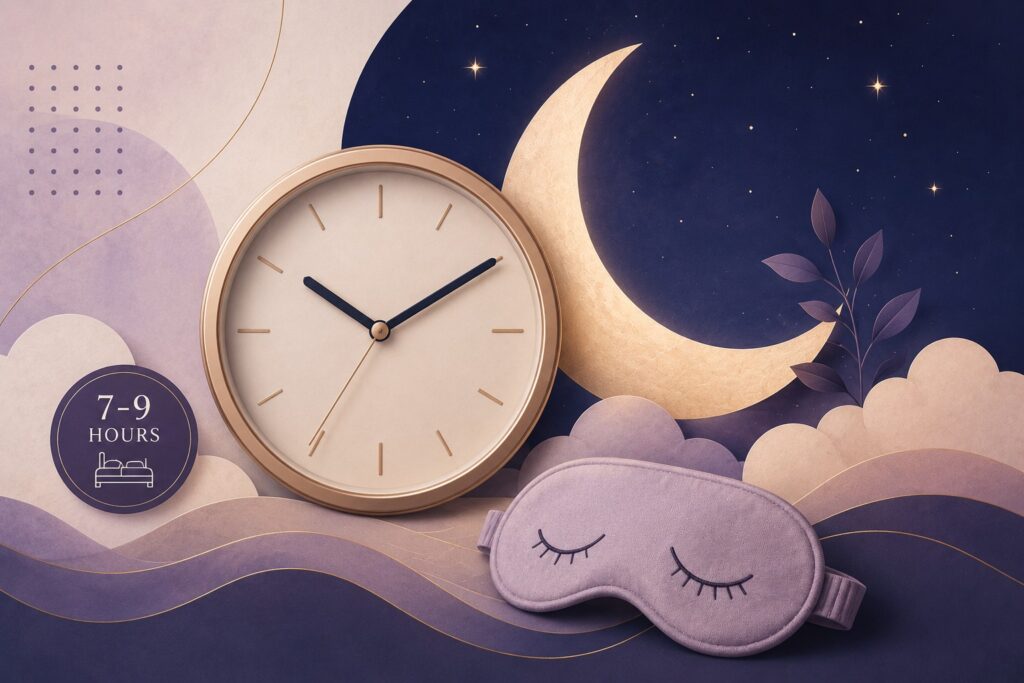
For most healthy adults, including women over 50, experts continue to recommend 7 to 9 hours of sleep per night. While individual needs can vary, consistently getting too little sleep may affect energy levels, concentration, mood, and overall well-being.
At the same time, sleep isn’t only about the number of hours you spend in bed. Sleep quality, continuity, and how rested you feel during the day are equally important. Understanding the difference can help you better evaluate your own sleep habits without worrying about every restless night.
This guide explains what current research says about sleep needs after 50, why sleep often feels different with age, and how to recognize whether you’re getting enough restorative rest.
How Much Sleep Do Women Over 50 Really Need?
Most major health organizations—including the National Sleep Foundation and the American Academy of Sleep Medicine—recommend that adults aged 18 and older aim for 7 to 9 hours of sleep each night. These recommendations continue to apply to most women after age 50.
Although many women report sleeping fewer hours as they get older, this doesn’t necessarily mean their bodies require less sleep. Instead, aging often changes how sleep is experienced, making it more likely that sleep becomes lighter or interrupted, even when total sleep time remains close to the recommended range.
For this reason, the goal isn’t to achieve a perfect number every night. Instead, it’s more helpful to think of sleep recommendations as a healthy range rather than a strict rule.
Recommended Sleep Duration for Women Over 50
| Age Group | Recommended Sleep Duration |
|---|---|
| 18–64 years | 7–9 hours |
| 65 years and older | 7–8 hours |
These recommendations represent averages based on population research. Some women naturally feel well rested with slightly less sleep, while others consistently function better toward the higher end of the recommended range.
Occasional short nights are also a normal part of life. What matters more is your overall sleep pattern over weeks and months rather than a single night of poor sleep.
Why Sleep Needs Stay Similar as We Age
One of the most common misconceptions about aging is that older adults simply need less sleep.
Current evidence suggests something different.
Researchers believe that the biological need for sleep remains largely stable throughout adulthood. What changes more noticeably is the ability to obtain continuous, restorative sleep.
As women age, sleep often becomes lighter and more fragmented. Some women wake up more frequently during the night, while others find themselves waking earlier than expected in the morning. These changes can create the impression that less sleep is needed when, in reality, obtaining enough quality sleep may simply become more challenging.
For a deeper explanation of why these changes occur, see Why Sleep Changes After 40, which explores the normal physiological changes that affect sleep with age.
Rather than focusing only on the number of hours slept, experts increasingly encourage adults to consider both sleep duration and sleep quality when evaluating whether they’re getting enough rest.
Sleep Duration vs. Sleep Quality: What’s the Difference?
It’s easy to assume that spending eight hours in bed automatically means you’re getting enough sleep. In reality, sleep duration and sleep quality measure different aspects of healthy sleep.
Sleep duration refers to the total amount of time you spend sleeping. Sleep quality describes how restorative that sleep actually is.
Someone who sleeps seven and a half uninterrupted hours may wake feeling refreshed, while another person who spends eight and a half hours in bed but experiences frequent awakenings may still feel tired the next day.
Both factors contribute to overall health, and neither should be viewed in isolation.
If you regularly wake up feeling unrefreshed despite sleeping within the recommended range, the issue may involve sleep quality rather than sleep duration. Our article Why Do I Wake Up Feeling Tired Even After Sleeping? explores that topic in greater detail.
Is Six Hours of Sleep Enough After 50?
Many women wonder whether six hours of sleep is “good enough,” especially if they’ve been sleeping that amount for years.
For most adults, including women over 50, six hours of sleep is generally below the recommended range. While some people naturally sleep slightly less without noticeable effects, research suggests that regularly getting fewer than seven hours of sleep may be associated with reduced alertness, slower thinking, mood changes, and a higher risk of certain long-term health conditions.
That doesn’t mean every woman who sleeps six hours is sleep deprived. Individual sleep needs vary, and how you feel during the day matters just as much as the number on the clock.
Instead of focusing on a single night’s sleep, it’s more useful to look at your overall pattern. If you consistently sleep around six hours but wake feeling refreshed, stay alert throughout the day, and don’t rely on frequent naps or excessive caffeine, your sleep may be meeting your personal needs. However, if daytime fatigue, difficulty concentrating, or irritability are common, your body may be signaling that you need more restorative sleep.
The goal isn’t to chase a perfect number each night but to recognize whether your current sleep schedule supports your overall health and daily functioning.
Can You Sleep Too Much?
While much attention is given to not getting enough sleep, some women wonder whether sleeping longer than average is a cause for concern.
Occasionally sleeping nine or even ten hours—such as after travel, illness, or several nights of poor sleep—is usually a normal response as the body recovers.
However, regularly needing much more sleep than usual may deserve closer attention, particularly if you continue to feel tired despite spending many hours in bed.
Research has found that both consistently short and consistently long sleep durations have been associated with various health concerns. It’s important to remember, however, that these studies show associations rather than proving that longer sleep directly causes health problems. In many cases, excessive sleep may reflect an underlying condition rather than being the cause itself.
For this reason, sleep duration should always be interpreted alongside other factors, including overall health, medications, lifestyle, and daytime functioning.
The most meaningful question isn’t simply, “How many hours am I sleeping?” but rather, “Am I waking up feeling reasonably rested and able to function well during the day?”
How to Tell Whether You’re Getting Enough Sleep
There’s no home test that can determine your ideal sleep duration, but your body often provides useful clues over time.
You may be getting enough sleep if you:
- Wake up feeling reasonably refreshed most mornings.
- Stay alert through most of the day without struggling to stay awake.
- Can concentrate on everyday tasks without persistent mental fatigue.
- Maintain a stable mood and energy level throughout the day.
- Rarely need long daytime naps to compensate for poor nighttime sleep.
On the other hand, you may not be getting enough restorative sleep if you regularly:
- Feel sleepy during quiet daytime activities.
- Depend on large amounts of caffeine just to stay alert.
- Experience ongoing difficulty concentrating.
- Feel irritable or unusually forgetful.
- Need to sleep much longer on weekends simply to recover.
These signs don’t necessarily mean you’re sleeping too few hours. They may also indicate that your sleep is frequently interrupted or isn’t as restorative as it could be.
If you often sleep within the recommended range but still wake feeling exhausted, our article Why Do I Wake Up Feeling Tired Even After Sleeping? explains some of the factors that may contribute to this experience.
When Should Persistent Sleep Problems Be Evaluated?
Occasional poor sleep is a normal part of life and usually isn’t a cause for concern.
However, if sleep difficulties continue for several weeks, interfere with your daily life, or are accompanied by excessive daytime sleepiness, it may be helpful to discuss your symptoms with a healthcare professional.
Persistent sleep problems can have many possible causes, some of which extend beyond normal aging. A healthcare provider can help determine whether additional evaluation is appropriate and recommend the next steps based on your individual situation.
Similarly, if you consistently sleep the recommended number of hours but never feel rested, it’s worth exploring whether another factor may be affecting your sleep quality.
Seeking professional advice isn’t a sign that something is necessarily wrong. Rather, it’s an opportunity to better understand your sleep and identify any issues that may benefit from further evaluation.
Conclusion
Most women over 50 continue to need around seven to nine hours of sleep each night, even though sleep often feels different with age.
Rather than assuming you need less sleep, it’s more helpful to consider the bigger picture. The amount of sleep you get, how well you sleep, and how you feel during the day all contribute to healthy rest.
It’s also normal for sleep patterns to change over time. Occasional restless nights or shorter sleep don’t necessarily indicate a problem, especially if you generally feel well rested and function normally during the day.
By understanding what current evidence says about sleep needs after 50, you can set realistic expectations, recognize when your sleep is supporting your health, and know when persistent concerns may warrant a conversation with a healthcare professional.
References
- National Sleep Foundation. How Much Sleep Do We Really Need?
- American Academy of Sleep Medicine (AASM). Recommended Amount of Sleep for a Healthy Adult: A Joint Consensus Statement.
- Centers for Disease Control and Prevention (CDC). How Much Sleep Do I Need?
- National Institute on Aging (NIA). A Good Night’s Sleep.
- MedlinePlus. Sleep.
- American Academy of Sleep Medicine. Healthy Sleep Habits