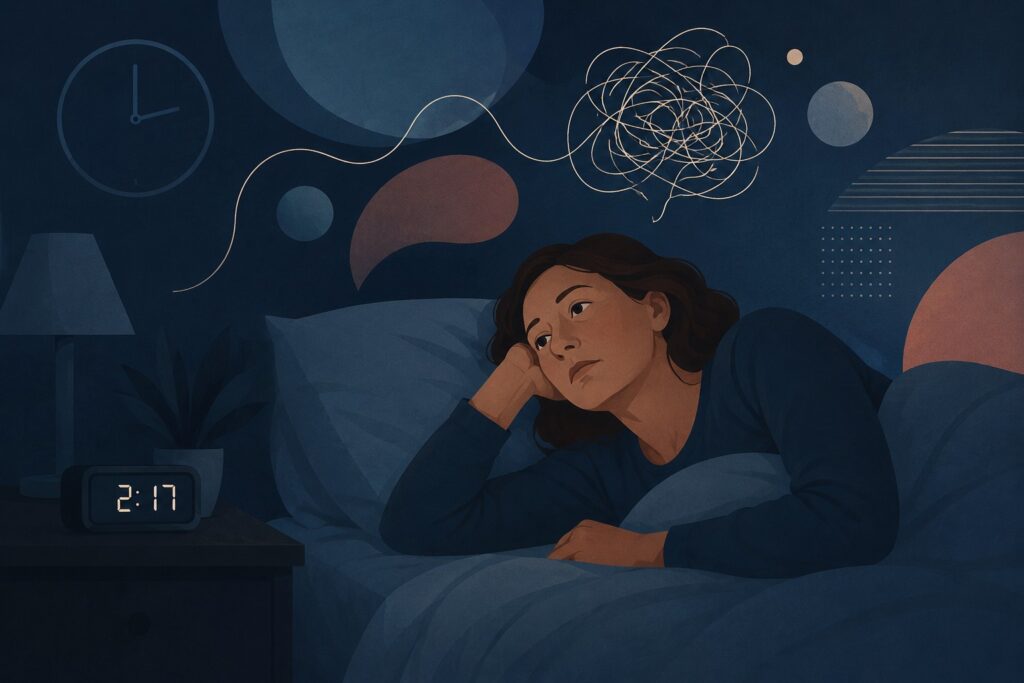

You go to bed at a reasonable hour, sleep for seven or even eight hours, yet wake up feeling as though you barely rested. If this sounds familiar, you’re not alone. Many women over 40 wonder why they still feel tired despite getting what seems like enough sleep.
The answer is that sleep quantity and sleep quality are not always the same thing. While the number of hours you sleep matters, it is only one part of what helps your body and brain recover overnight. How well you sleep—and whether your sleep is continuous and restorative—can be just as important.
Research suggests that several factors can affect how refreshed you feel in the morning, including normal age-related changes in sleep, lifestyle habits, stress, and underlying health conditions. Understanding these factors can help you identify practical ways to support better rest.
In this guide, you’ll learn why you may wake up feeling tired even after a full night’s sleep, what research suggests about restorative sleep, and when persistent morning fatigue may warrant professional evaluation.
Is It Normal to Wake Up Feeling Tired Sometimes?
Yes. Almost everyone experiences an occasional morning when they don’t feel fully rested, even after spending enough time in bed.
Temporary fatigue can happen after a stressful week, changes in routine, travel, illness, or simply a few nights of less restorative sleep. In these situations, energy levels often improve once normal sleep patterns return.
However, waking up tired becomes more concerning when it happens regularly over several weeks or begins to interfere with daily life. Persistent morning fatigue may indicate that your sleep is not providing the recovery your body needs, even if you are sleeping for what appears to be an adequate number of hours.
Understanding why this happens begins with recognizing the difference between sleeping longer and sleeping better.
Sleep Quantity vs. Sleep Quality
Many people naturally focus on the number of hours they sleep. While getting enough sleep is important, more hours do not always mean better rest.
Sleep quality refers to how restorative your sleep is. A person who sleeps seven uninterrupted hours may wake up feeling far more refreshed than someone who spends nine hours in bed but experiences fragmented or less restorative sleep.
Several factors contribute to healthy sleep quality, including:
- Sleeping through the night with minimal interruptions.
- Moving naturally through the different stages of sleep.
- Spending enough time asleep to support physical and mental recovery.
- Waking up feeling reasonably refreshed most mornings.
This helps explain why two people who sleep the same number of hours may feel very different the next day.
If you’ve noticed that your sleep has become lighter with age, you may also enjoy our guide on Why Is My Sleep Lighter After 50?, which explains how normal changes in sleep stages can influence how rested you feel. (Internal link)
Why You May Wake Up Feeling Tired Even After Sleeping
Morning fatigue rarely has a single cause. Instead, it often reflects a combination of factors that affect how restorative sleep feels.
Some of the most common contributors include:
Natural Changes in Sleep With Age
As people get older, sleep architecture gradually changes. Research suggests that deep sleep becomes less abundant while lighter sleep stages become more common.
Although these changes are considered a normal part of aging, they may leave some women feeling less refreshed upon waking, even if total sleep time remains similar.
Interrupted Sleep
Even brief awakenings that you don’t fully remember can reduce how restorative sleep feels.
You may not recall waking several times during the night, but repeated interruptions can make sleep feel less satisfying by morning.
If nighttime awakenings are a frequent problem, our article Why Am I Waking Up in the Middle of the Night? explores common reasons this may happen and practical strategies that may help. (Internal link)
Stress and Mental Load
Periods of increased stress may affect sleep quality, even when you remain asleep for most of the night.
Some women report waking feeling mentally exhausted after particularly stressful days, suggesting that emotional well-being may influence how restorative sleep feels.
Researchers continue studying the complex relationship between stress, brain activity during sleep, and daytime energy.
Lifestyle Factors That May Affect How Rested You Feel
The quality of your sleep is influenced by much more than what happens after you turn off the lights. Daily habits, routines, and overall health can all affect how refreshed you feel the next morning.
While occasional tired mornings are normal, consistently waking up feeling exhausted may be a sign that one or more lifestyle factors are interfering with restorative sleep.
Inconsistent Sleep Schedules
Going to bed and waking up at different times each day can make it harder for your body’s internal clock to maintain a consistent sleep-wake rhythm.
Research suggests that regular sleep schedules support healthier sleep patterns and may help improve overall sleep quality over time.
Limited Physical Activity
Regular physical activity supports many aspects of healthy aging, including sleep.
Women who spend most of the day sitting or who exercise infrequently may find it harder to feel refreshed in the morning. While exercise is not a cure for poor sleep, studies suggest it may contribute to better sleep quality for many adults.
Alcohol and Caffeine Timing
Both alcohol and caffeine can influence sleep, although in different ways.
Caffeine consumed later in the day may make sleep less restorative for some people, even if falling asleep is not difficult.
Alcohol, on the other hand, may initially promote drowsiness but can disrupt normal sleep patterns later in the night, making sleep feel less refreshing by morning.
Chronic Stress
Emotional stress does not always prevent sleep, but it may affect how restorative that sleep feels.
Even if you remain asleep for most of the night, ongoing stress can leave you feeling mentally and physically drained when you wake up.
Because stress and sleep influence one another, improving one often supports the other.
Could an Underlying Health Condition Be Contributing?
Sometimes, persistent morning fatigue has causes beyond normal sleep changes or daily habits.
While this article focuses on educational information rather than diagnosis, it is helpful to recognize that certain health conditions may contribute to waking up feeling unusually tired.
Examples include:
- Sleep-related breathing disorders, such as obstructive sleep apnea
- Thyroid disorders
- Iron deficiency
- Certain chronic medical conditions
- Some medications that affect sleep or daytime alertness
These conditions require professional evaluation and are beyond the scope of this article. However, they highlight why persistent fatigue should not simply be dismissed as “getting older.”
If you regularly wake feeling exhausted despite consistently getting enough sleep, discussing your symptoms with a healthcare professional may help identify any underlying contributors.
What Research Suggests May Help You Wake Up Feeling More Refreshed
Although there is no single solution that works for everyone, research suggests that several evidence-based habits may support more restorative sleep and improve morning alertness over time.
Keep a Consistent Sleep Schedule
Going to bed and waking up at roughly the same time each day helps reinforce your body’s natural circadian rhythm.
Even on weekends, maintaining a regular schedule may support healthier sleep patterns.
Get Morning Sunlight
Natural light soon after waking helps regulate the body’s internal clock and supports a healthy sleep-wake cycle.
Many sleep experts recommend spending a few minutes outdoors or near a bright window early in the day whenever possible.
Stay Physically Active
Regular movement supports overall health and may contribute to better sleep quality.
Activities such as walking, strength training, swimming, or cycling can all be beneficial when performed consistently.
Create a Comfortable Sleep Environment
A quiet, cool, and dark bedroom may reduce unnecessary sleep disruptions and improve overall sleep continuity.
Our upcoming Sleep Hygiene: Small Habits That Can Improve Sleep Quality guide explores these practical strategies in greater detail. (Future internal link)
Focus on Overall Sleep Quality
Rather than concentrating only on the number of hours you sleep, it can be more helpful to ask yourself broader questions:
- Do I usually wake feeling reasonably refreshed?
- Am I alert throughout most of the day?
- Is my sleep fairly uninterrupted?
- Do I feel my energy is adequate for my normal activities?
These questions often provide a more complete picture of sleep health than simply counting hours spent in bed.
When Should You Talk to a Healthcare Professional?
Occasionally waking up tired is common and usually not a cause for concern.
However, it may be appropriate to seek medical advice if:
- Morning fatigue persists for several weeks.
- You feel excessively sleepy during the day.
- Fatigue interferes with work, relationships, or daily activities.
- A partner notices loud snoring, pauses in breathing, or restless sleep.
- You experience additional symptoms such as unexplained weight changes, dizziness, or persistent weakness.
A healthcare professional can help determine whether your symptoms are related to normal sleep changes, lifestyle factors, or an underlying medical condition that deserves further evaluation.
The Bottom Line
Waking up feeling tired after what seems like a full night’s sleep can be frustrating, especially when you believe you’ve done everything “right.” However, the number of hours you spend in bed is only one part of the picture.
Research suggests that sleep quality, sleep continuity, and the body’s natural changes with age all influence how refreshed you feel in the morning. As women get older, changes in sleep architecture may make sleep feel less restorative, even when total sleep time remains adequate.
Daily habits also matter. Maintaining a consistent sleep schedule, staying physically active, getting regular daylight exposure, and creating an environment that supports uninterrupted sleep may all contribute to feeling more rested over time.
Most importantly, occasional morning fatigue is common. But if you consistently wake up exhausted despite getting enough sleep, or if daytime fatigue begins to affect your quality of life, it’s worth discussing your symptoms with a healthcare professional to rule out any underlying conditions.
Understanding what contributes to restorative sleep is an important step toward improving both your nights and your days.
References
- National Institute on Aging. A Good Night’s Sleep. https://www.nia.nih.gov/health/sleep
- Centers for Disease Control and Prevention. About Sleep. https://www.cdc.gov/sleep
- National Heart, Lung, and Blood Institute. Sleep Deprivation and Deficiency. https://www.nhlbi.nih.gov/health/sleep-deprivation
- American Academy of Sleep Medicine. Healthy Sleep Resources. https://sleepeducation.org
- Ohayon MM, Carskadon MA, Guilleminault C, Vitiello MV. Meta-analysis of quantitative sleep parameters from childhood to old age in healthy individuals. Sleep. 2004;27(7):1255-1273.