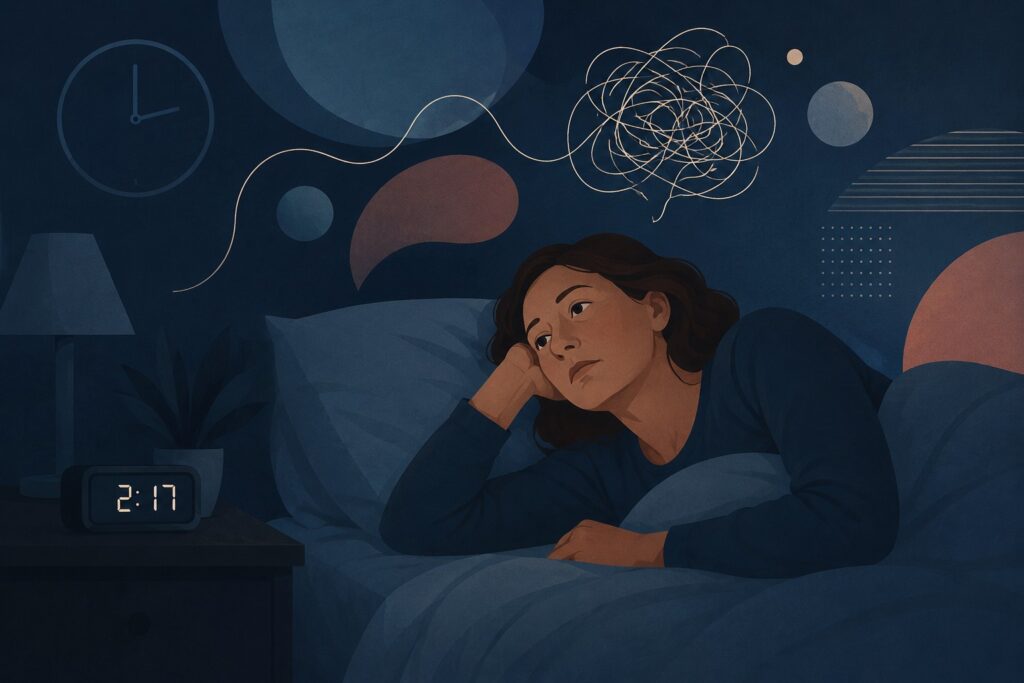
Many women notice that sleep starts to feel different after 40. You may wake up more often during the night, have trouble falling asleep, or wake feeling less refreshed than you used to. While these changes can be frustrating, they are also common and often have more than one cause.
Sleep is influenced by many factors, including the natural aging process, hormonal changes, your body’s internal clock, lifestyle habits, and overall health. Understanding how these factors work together is the first step toward improving sleep and knowing which changes deserve a closer look.
This guide introduces the most common reasons sleep changes after 40 and serves as the starting point for Bloomelle’s Sleep Support collection. Each section below provides a brief overview of an important topic, along with a dedicated guide where you can learn more.
Why Am I Waking Up in the Middle of the Night?
Waking up once in a while is perfectly normal, but frequent nighttime awakenings become more common as we get older. These interruptions may be related to natural aging, lifestyle habits, hormonal changes, or other factors that affect sleep quality.
In this guide, you’ll learn:
- Why nighttime awakenings become more common after 40
- Common factors that may interrupt sleep
- What may help support uninterrupted sleep
- When frequent awakenings deserve further evaluation
Why Is It Harder to Fall Asleep After 40?
Many women notice that falling asleep takes longer than it used to. Changes in your sleep-wake cycle, evening habits, and other age-related factors may all influence how easily you fall asleep.
In this guide, you’ll learn:
- Why falling asleep may become more difficult
- Factors that can affect sleep onset
- Habits that may support better sleep
- When difficulty falling asleep may require medical attention
Why Is My Sleep Lighter After 50?
Sleep often becomes lighter with age, making it easier to wake up during the night. Understanding this normal age-related change can help explain why sleep may feel different than it did years ago.
In this guide, you’ll learn:
- How sleep naturally changes with age
- Why deep sleep may decrease over time
- What lighter sleep may mean for overall sleep quality
- Ways to support healthier sleep as you age
Why Do I Wake Up Feeling Tired Even After Sleeping?
Spending enough time in bed doesn’t always mean you’ll wake up feeling rested. Sleep quality, nighttime interruptions, and other health or lifestyle factors can all affect how refreshed you feel in the morning.
In this guide, you’ll learn:
- Why sleep quality matters as much as sleep duration
- Common reasons you may wake up feeling tired
- Factors that may reduce restorative sleep
- When ongoing morning fatigue should be evaluated
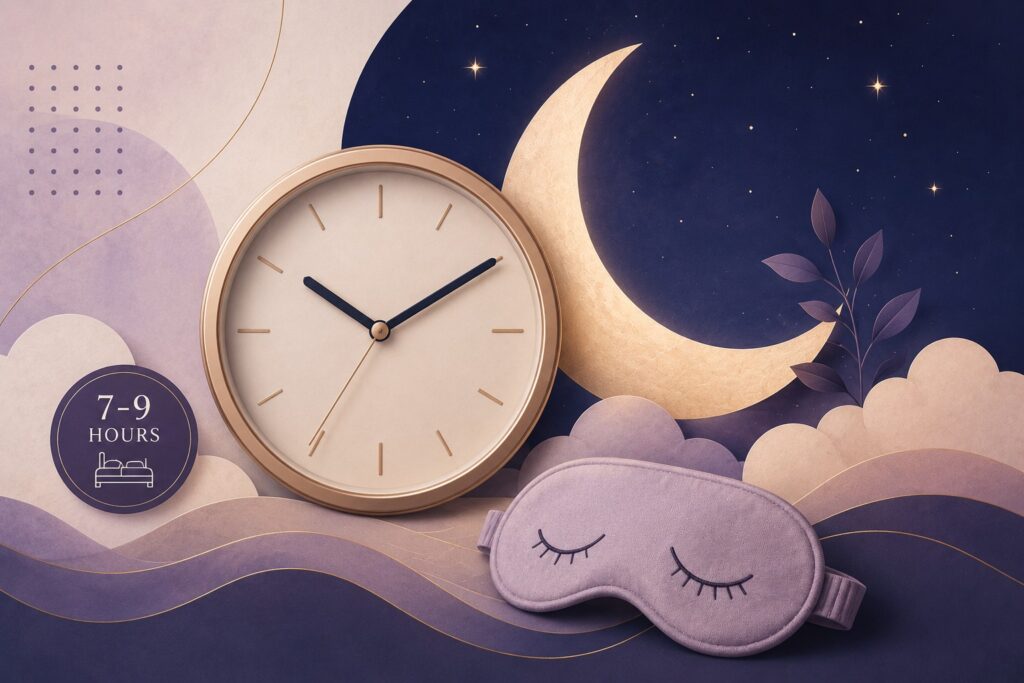
How Much Sleep Do Women Over 50 Really Need?
Many women assume they need less sleep as they get older. In reality, healthy adults generally require about the same amount of sleep throughout adulthood, although changes in sleep quality and sleep patterns often become more noticeable with age.
In this guide, you’ll learn:
- How much sleep experts recommend after 50
- Why sleep quality matters as much as sleep duration
- Common myths about sleep and aging
- How to tell if you’re getting enough restorative sleep
Sleep Hygiene: Small Habits That Can Improve Sleep Quality
Healthy sleep isn’t determined by bedtime alone. Daily habits, your sleep environment, and evening routines can all influence how easily you fall asleep and how well you sleep through the night.
In this guide, you’ll learn:
- What sleep hygiene really means
- Daily habits that may support better sleep
- Simple ways to create a sleep-friendly environment
- Small lifestyle changes that can make a difference over time
When Should You Talk to a Healthcare Professional About Sleep Changes?
Occasional sleep problems are common, especially as we get older. However, persistent sleep difficulties, excessive daytime sleepiness, or symptoms that interfere with your daily life deserve professional evaluation to help identify any underlying causes.
In this section, you’ll learn:
- Which sleep changes are often considered normal
- Signs that shouldn’t be ignored
- When it’s time to seek medical advice
- Why early evaluation can be helpful
Conclusion
Sleep naturally changes throughout adulthood, and many women begin noticing these differences after 40. Understanding the most common factors that influence sleep can help you better recognize what’s happening and identify practical ways to support healthier rest.
This guide is designed to introduce the key topics within Bloomelle’s Sleep Support collection. Whether you’re waking up during the night, finding it harder to fall asleep, wondering how much sleep you really need, or looking for healthier sleep habits, you’ll find dedicated guides that explore each topic in greater depth.
As the Sleep Support library continues to grow, this page will serve as your starting point for understanding sleep during midlife and healthy aging.
References
- National Institute on Aging. A Good Night’s Sleep. https://www.nia.nih.gov/health/sleep
- National Institute on Aging. Sleep and Older Adults. https://www.nia.nih.gov/health/sleep/sleep-and-older-adults
- Centers for Disease Control and Prevention (CDC). About Sleep. https://www.cdc.gov/sleep/about/
- MedlinePlus. Sleep Disorders. https://medlineplus.gov/sleepdisorders.html
- American Academy of Sleep Medicine & Sleep Research Society. Recommended Amount of Sleep for a Healthy Adult: A Joint Consensus Statement. https://jcsm.aasm.org/doi/10.5664/jcsm.4758
- Mayo Clinic. How Many Hours of Sleep Are Enough for Good Health? https://www.mayoclinic.org/healthy-lifestyle/adult-health/expert-answers/how-many-hours-of-sleep-are-enough/faq-20057898
- Mayo Clinic. Sleep Tips: 6 Steps to Better Sleep. https://www.mayoclinic.org/healthy-lifestyle/adult-health/in-depth/sleep/art-20048379