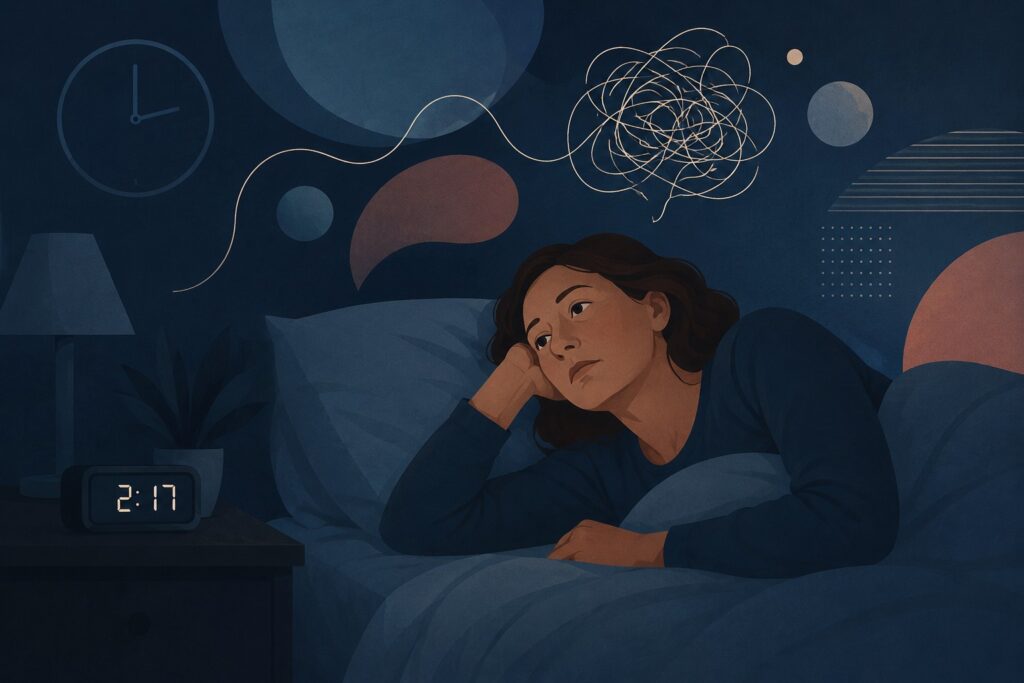
Waking up in the middle of the night can be frustrating, especially if it happens several times a week. While occasional nighttime awakenings are normal, frequent interruptions may leave you feeling less rested, even if you spend enough hours in bed.
For many women over 40, waking during the night becomes more common with age. Research suggests that changes in sleep patterns, lifestyle habits, stress, and overall health may all contribute to interrupted sleep. In some cases, environmental factors or simple daily routines may also play a role.
The good news is that waking up during the night doesn’t always mean something is seriously wrong. Understanding why it happens is the first step toward identifying habits that may support more consistent, restorative sleep.
Is It Normal to Wake Up During the Night?
Yes—to a certain extent.
Most people wake up briefly several times during the night without realizing it. These short awakenings often occur between sleep cycles and usually last only a few seconds or minutes before you fall back asleep.
Problems tend to arise when you become fully awake, stay awake for an extended period, or find it difficult to return to sleep. If this happens regularly, your sleep quality may be affected even if you’re getting the recommended number of hours in bed.
Sleep experts sometimes refer to this as sleep maintenance, or the ability to stay asleep throughout the night. As we get older, maintaining uninterrupted sleep may become more challenging for a variety of reasons.
Why Nighttime Awakenings Become More Common After 40
Many adults notice that their sleep changes with age. Instead of sleeping deeply from bedtime until morning, they may wake once—or several times—during the night.
Research suggests this can happen because multiple factors often overlap, including:
- natural changes in sleep patterns
- increased sensitivity to noise or light
- stress and emotional demands
- lifestyle habits
- changes in overall health
- hormonal transitions during midlife
Rather than having one single cause, nighttime awakenings are often the result of several small factors working together.
If you’d like to learn more about how sleep naturally changes with age, explore our guide on Why Sleep Changes After 40.
Common Reasons You May Wake Up During the Night
Your Sleep Naturally Becomes Lighter
One of the most common reasons people wake more often as they get older is that deep sleep gradually becomes less abundant.
Deep sleep is the stage most associated with physical restoration. As its proportion naturally declines with age, lighter stages of sleep make it easier for small disturbances—such as sounds, movement, or temperature changes—to wake you.
This doesn’t necessarily mean your sleep is unhealthy, but it may explain why you become more aware of nighttime interruptions than you did in your twenties or thirties.
Stress Can Make Your Brain More Alert
Daily stress doesn’t always make it harder to fall asleep. Sometimes it shows up later in the night.
When you’re under emotional pressure, your brain may remain more alert than usual, making it easier to wake during normal sleep transitions. Some people also notice that once they wake, racing thoughts make it difficult to fall asleep again.
Research suggests that chronic stress may contribute to poorer sleep continuity and lower overall sleep quality.
Your Bedroom Environment May Be Interrupting Sleep
Small environmental factors can have a bigger impact than many people realize.
Common examples include:
- a bedroom that’s too warm
- outside noise
- light entering through windows
- a partner’s movements
- pets waking you during the night
As sleep naturally becomes lighter with age, these disturbances may become more noticeable than they once were.
Other Factors That May Interrupt Your Sleep
Nighttime awakenings aren’t always caused by changes in sleep itself. Sometimes, everyday habits or normal bodily functions can interrupt sleep and make it harder to fall back asleep.
Needing to Use the Bathroom
Getting up to use the bathroom once during the night isn’t unusual, particularly as people get older.
Several factors may contribute, including:
- drinking large amounts of fluids close to bedtime
- caffeine or alcohol in the evening
- certain medications
- normal age-related changes in bladder function
If you’re waking multiple times every night to urinate, it’s worth mentioning it to a healthcare professional, as persistent nighttime urination (nocturia) can sometimes be associated with underlying health conditions.
Caffeine May Last Longer Than You Think
Many people associate caffeine with difficulty falling asleep, but it can also contribute to waking during the night.
Caffeine has a relatively long half-life, meaning it can remain in your system for several hours. An afternoon coffee, tea, energy drink, or even chocolate may still affect sleep later that night, especially if you’re sensitive to caffeine.
Everyone responds differently, but if nighttime awakenings are becoming more frequent, it may be worth experimenting with limiting caffeine later in the day.
Alcohol Can Disrupt Sleep Later in the Night
Although alcohol may make some people feel sleepy initially, research suggests it can reduce sleep quality as the night progresses.
As alcohol is metabolized, sleep often becomes lighter and more fragmented. This may increase the likelihood of waking during the early morning hours and make it more difficult to return to sleep.
Temperature Changes Can Wake You Up
A bedroom that’s too warm or too cold may interrupt sleep.
Research generally suggests that a cool, comfortable sleeping environment supports better sleep quality. Heavy bedding, seasonal temperature changes, or fluctuations in body temperature may all contribute to nighttime awakenings.
Simple adjustments—such as breathable bedding, comfortable sleepwear, or a cooler room—may help some people sleep more comfortably.
Could Menopause Play a Role?
For women in midlife, menopause and perimenopause may also contribute to nighttime awakenings.
Hormonal changes can influence sleep in several ways. Some women experience hot flashes or night sweats that wake them suddenly, while others notice that their sleep simply becomes lighter or more fragmented during this stage of life.
However, menopause isn’t the only possible explanation. Lifestyle habits, stress, aging, medications, and other health factors may also contribute.
If you’re interested in how hormonal changes affect sleep, see our article on Why Sleep Changes After 40, which explores this topic in more detail.
What May Help You Stay Asleep Longer?
While there’s no single solution that works for everyone, research suggests several habits may support better sleep continuity.
Maintain a Consistent Sleep Schedule
Going to bed and waking up at roughly the same time each day helps reinforce your body’s natural sleep-wake cycle.
Even on weekends, keeping a relatively consistent schedule may make it easier to stay asleep throughout the night.
Create a Comfortable Sleep Environment
A quiet, dark, and cool bedroom may reduce unnecessary awakenings.
Some people also find that blackout curtains, white noise, or comfortable bedding help minimize disruptions.
Limit Evening Stimulants
Consider reducing:
- caffeine later in the afternoon or evening
- alcohol close to bedtime
- large meals immediately before bed
These changes may not eliminate nighttime awakenings, but they can support healthier sleep for some individuals.
Develop a Relaxing Bedtime Routine
Calming activities before bed may help your body prepare for sleep.
Examples include:
- reading a book
- gentle stretching
- meditation
- deep breathing exercises
- listening to relaxing music
The goal isn’t to force sleep but to create a routine that signals it’s time to wind down.
For a more comprehensive guide, see our upcoming article on Sleep Hygiene: Small Habits That Can Improve Sleep Quality.
When Should You Talk to a Healthcare Professional?
Occasional nighttime awakenings are common and usually aren’t a cause for concern.
However, it’s a good idea to seek medical advice if you:
- wake frequently for several weeks despite improving your sleep habits
- regularly struggle to fall back asleep
- feel excessively sleepy during the day
- snore loudly or gasp for air during sleep
- notice your sleep problems are affecting your daily activities, mood, or safety
A healthcare professional can help determine whether an underlying sleep disorder, medical condition, or medication may be contributing to your symptoms.
The Bottom Line
Waking up in the middle of the night becomes more common with age, and there isn’t always a single reason why it happens. Natural changes in sleep, stress, lifestyle habits, your sleeping environment, and midlife hormonal changes may all play a role.
While occasional awakenings are normal, frequent interruptions can affect how rested you feel the next day. Fortunately, small adjustments to your daily routine and sleep habits may help improve sleep continuity for many people.
If nighttime awakenings become persistent or are accompanied by other concerning symptoms, speaking with a healthcare professional can help identify potential underlying causes and the most appropriate next steps.
References
- National Library of Medicine. Healthy Sleep. MedlinePlus. Available at: https://medlineplus.gov/healthysleep.html. Accessed July 2026.
- American Academy of Sleep Medicine – Sleep Education. Sleep Health Resources. Accessed July 2026.
- Harvard Medical School Division of Sleep Medicine – Sleep and Aging. Genetics, Aging and Sleep: Sleep and Aging. Accessed July 2026.
- American Academy of Sleep Medicine Journal – Sleep is Essential to Health. Ramar K, et al. Sleep. 2021.
- National Library of Medicine. Healthy Sleep. MedlinePlus. Recommendations for improving sleep habits, including maintaining a consistent sleep schedule, limiting caffeine and alcohol before bedtime, and creating a comfortable sleep environment. Accessed July 2026.