Many women notice changes in memory, concentration, or mental sharpness as they get older. Misplacing keys more often, forgetting a name for a moment, or taking longer to learn something new can feel concerning, but these experiences do not necessarily indicate a serious problem. Some changes in thinking and memory are considered a normal part of healthy aging, while others deserve medical evaluation.
The encouraging news is that brain health is influenced by many everyday habits. Although no lifestyle can completely prevent age-related cognitive changes, research suggests that regular physical activity, quality sleep, a balanced diet, social engagement, and mentally stimulating activities may help support cognitive wellness throughout later life.
This guide explains how the brain naturally changes after 50, which lifestyle habits appear to have the strongest scientific support, and when changes in memory or thinking should be discussed with a healthcare professional.
What Is Brain Health?
Brain health refers to the brain’s ability to perform the functions we rely on every day, including memory, learning, attention, reasoning, communication, and emotional regulation.
A healthy brain allows us to:
- Learn new information
- Solve everyday problems
- Stay focused
- Make decisions
- Remember important events
- Manage emotions
- Maintain independence as we age
Brain health is not determined by a single factor. Instead, it reflects the combined effects of genetics, lifestyle, overall physical health, social connections, and environmental influences over many years.
As women grow older, maintaining brain health becomes an important part of supporting overall well-being and quality of life.
How the Brain Naturally Changes After 50
The brain continues to change throughout adulthood. Some of these changes are expected and do not necessarily interfere with daily life.
For example, it may take slightly longer to recall a word or remember where you placed an item. Processing new information may also become a little slower than it was in younger adulthood. These gradual changes are considered a normal part of aging for many people.
Fortunately, the brain also remains adaptable. Scientists refer to this ability as neuroplasticity, meaning the brain can continue forming new connections and adapting in response to learning, experiences, and lifestyle habits throughout life.
Because of this lifelong adaptability, healthy daily routines may continue supporting cognitive function well beyond midlife.
Normal Age-Related Changes vs. Signs That Deserve Attention
Not every memory lapse is a reason for concern. Understanding the difference between typical aging and more significant cognitive changes can help women know when professional evaluation may be appropriate.
| Common age-related changes | Changes that should be evaluated |
|---|---|
| Occasionally forgetting names but remembering them later | Frequently forgetting recently learned information |
| Misplacing household items occasionally | Repeatedly losing items in unusual places |
| Taking longer to find the right word | Difficulty following conversations consistently |
| Needing reminders for appointments | Missing important appointments despite reminders |
| Learning new technology more slowly | Difficulty completing familiar daily tasks |
Occasional forgetfulness is common and often reflects normal aging, stress, poor sleep, or distraction rather than a serious neurological condition.
However, memory or thinking changes that interfere with everyday independence should be discussed with a healthcare professional for further evaluation.
Why Lifestyle Matters More Than Many People Realize
Although aging itself cannot be stopped, researchers increasingly recognize that many factors influencing brain health are modifiable.
Daily habits affect several systems that support healthy brain function, including:
- Blood circulation
- Blood sugar regulation
- Sleep quality
- Chronic inflammation
- Cardiovascular health
- Physical fitness
- Emotional well-being
Because these systems work together, small improvements across multiple lifestyle areas may contribute more to long-term cognitive wellness than focusing on any single habit alone.
Rather than searching for one “brain-boosting” solution, experts generally recommend building a pattern of healthy behaviors that supports overall health.
Physical Activity: One of the Strongest Supports for Brain Health
Among all lifestyle habits studied, regular physical activity consistently shows one of the strongest associations with healthy cognitive aging.
Exercise does much more than strengthen muscles and improve cardiovascular fitness. It also increases blood flow to the brain, supports the delivery of oxygen and nutrients, and may encourage the release of proteins involved in maintaining healthy brain cells and communication between them.
Research suggests that women who stay physically active throughout midlife and older adulthood may experience slower age-related cognitive decline than those who are largely inactive. While exercise cannot guarantee the prevention of memory problems, it appears to play an important role in supporting overall brain health.
Activities that may contribute include:
- Brisk walking
- Cycling
- Swimming
- Dancing
- Gardening
- Strength training
- Balance and flexibility exercises
The best type of exercise is often the one that can be maintained consistently over time.
If you’d like to learn more about staying active as you age, see our guides on Strength Training for Women Over 50 and Balance and Fall Prevention After 50.
A Nutritious Eating Pattern May Help Support Cognitive Wellness
The brain requires a continuous supply of nutrients to function efficiently. While no single food can dramatically improve memory, overall dietary patterns appear to influence long-term brain health.
Research has found that eating patterns rich in plant foods, healthy fats, and minimally processed ingredients are associated with better cognitive health as people age.
Foods commonly included in these eating patterns include:
- Vegetables
- Fruits
- Whole grains
- Beans and legumes
- Nuts and seeds
- Fish
- Olive oil
These foods provide vitamins, minerals, fiber, antioxidants, and healthy fats that may help support normal brain function and cardiovascular health.
At the same time, limiting highly processed foods, added sugars, and excessive saturated fat may contribute to better overall health, including the health of blood vessels that supply the brain.
Rather than focusing on “brain foods,” experts generally encourage building balanced eating habits that support the whole body.
Quality Sleep Plays an Important Role
Sleep is one of the body’s essential restoration periods, including for the brain.
During sleep, the brain continues performing important functions related to memory processing, learning, and maintaining healthy neural activity. Poor sleep over long periods has been associated with difficulties involving attention, concentration, and memory.
Many women notice that sleep changes with age, making it more difficult to fall asleep, stay asleep, or feel fully rested the next morning.
Although improving sleep does not guarantee better memory, maintaining healthy sleep habits may help support cognitive performance and overall well-being.
Because sleep is a dedicated Bloomelle authority topic, we explore this subject in greater detail in Why Sleep Changes After 40.
Keeping Your Mind Active
The brain responds to challenge throughout life.
Learning new skills and engaging in mentally stimulating activities may help maintain cognitive function by encouraging the brain to build and strengthen neural connections.
Examples include:
- Reading books
- Learning a language
- Playing a musical instrument
- Solving puzzles
- Taking educational classes
- Trying new hobbies
- Learning digital skills
- Practicing creative activities such as painting or writing
The goal is not simply to stay busy but to continue exposing the brain to new experiences that require learning, attention, and problem-solving.
Mental stimulation appears to be most beneficial when combined with other healthy lifestyle habits rather than practiced in isolation.
Social Connections Matter More Than Many People Realize
Healthy aging is not only physical—it is also social.
Maintaining meaningful relationships and participating in social activities may help support emotional well-being and cognitive health.
Conversations, shared experiences, volunteering, community activities, and spending time with family and friends all challenge the brain in different ways by encouraging communication, memory, emotional processing, and problem-solving.
Some studies have found that social isolation and chronic loneliness are associated with poorer cognitive outcomes later in life. Although researchers continue studying these relationships, maintaining regular social engagement appears to be one important component of healthy aging.
Even small, consistent interactions—such as joining a walking group, attending a community class, or scheduling regular visits with loved ones—can contribute to a more active and connected lifestyle.
Managing Cardiovascular Health Also Supports the Brain
The brain depends on a healthy circulatory system.
Conditions that affect the heart and blood vessels may also influence cognitive health because they can reduce the efficient delivery of oxygen and nutrients to brain tissue.
For this reason, many of the same habits that support heart health may also support brain health, including:
- Staying physically active
- Following a balanced eating pattern
- Maintaining healthy blood pressure
- Managing blood sugar when appropriate
- Avoiding tobacco
- Limiting excessive alcohol consumption
- Attending routine preventive healthcare visits
Rather than viewing brain health separately from the rest of the body, researchers increasingly recognize that healthy aging depends on the interaction between multiple body systems.
Supporting cardiovascular health is therefore an important part of supporting long-term cognitive wellness.
Can You Prevent Cognitive Decline?
This is one of the most common questions women ask as they get older.
The honest answer is that there is no guaranteed way to prevent cognitive decline or eliminate the risk of conditions such as dementia. Brain health is influenced by many factors, including age, genetics, medical conditions, and lifestyle.
However, research suggests that healthy daily habits may help reduce the impact of some modifiable risk factors and support cognitive function over time.
Organizations such as the World Health Organization (WHO) and the National Institute on Aging emphasize that maintaining overall physical health is closely connected to maintaining brain health.
Rather than searching for a single solution, experts recommend building a healthy lifestyle that includes:
- Regular physical activity
- A nutritious eating pattern
- Good sleep habits
- Mental stimulation
- Social engagement
- Management of cardiovascular risk factors
- Routine preventive healthcare
Each habit may contribute a small benefit on its own, but together they create a foundation that supports healthy aging.
Myths About Brain Health After 50
Misconceptions about aging and the brain are common. Understanding what research actually shows can help women make informed decisions instead of relying on outdated beliefs.
Myth: Memory loss is inevitable after 50.
Reality: Some slowing in memory retrieval and information processing is considered a normal part of aging, but significant memory loss is not an inevitable consequence of getting older. Many women remain mentally sharp well into later life.
Myth: Crossword puzzles alone keep the brain healthy.
Reality: Mental challenges can be beneficial, but cognitive wellness is supported by a combination of healthy habits rather than a single activity. Physical activity, sleep, nutrition, and social interaction all appear to play important roles.
Myth: It’s too late to improve brain health.
Reality: The brain continues adapting throughout life through a process known as neuroplasticity. While aging cannot be reversed, adopting healthier habits later in life may still support cognitive function and overall well-being.
Myth: Supplements can replace healthy habits.
Reality: Many products claim to “boost memory” or “improve brain function,” but evidence supporting these claims is often limited or inconsistent. A healthy lifestyle remains the foundation of brain health, while supplements should never be viewed as a substitute for balanced nutrition, regular exercise, or quality sleep.
When Should You Talk to a Healthcare Professional?
Occasional forgetfulness is common, particularly during periods of stress, poor sleep, or major life changes.
However, persistent or worsening changes in memory, thinking, or daily functioning deserve professional evaluation.
Consider speaking with a healthcare professional if you or your family notice changes such as:
- Frequently repeating the same questions
- Becoming lost in familiar places
- Difficulty managing finances or medications
- Trouble following conversations
- Significant personality or behavioral changes
- Difficulty completing familiar daily tasks
- Memory problems that interfere with independence
Many conditions besides dementia—including medication side effects, vitamin deficiencies, thyroid disorders, sleep problems, depression, or hearing loss—can also affect memory and thinking. Identifying these issues early may allow appropriate treatment or management.
Seeking evaluation does not necessarily mean a serious condition is present. It is simply an important step toward understanding what may be contributing to cognitive changes.
Supporting Brain Health Is Part of Healthy Aging
Brain health is not determined by one habit, one food, or one supplement. Instead, it reflects the combined effects of the choices we make throughout life.
While aging naturally brings some changes in memory and thinking, many women continue to lead active, engaged, and intellectually fulfilling lives well beyond their 50s and 60s.
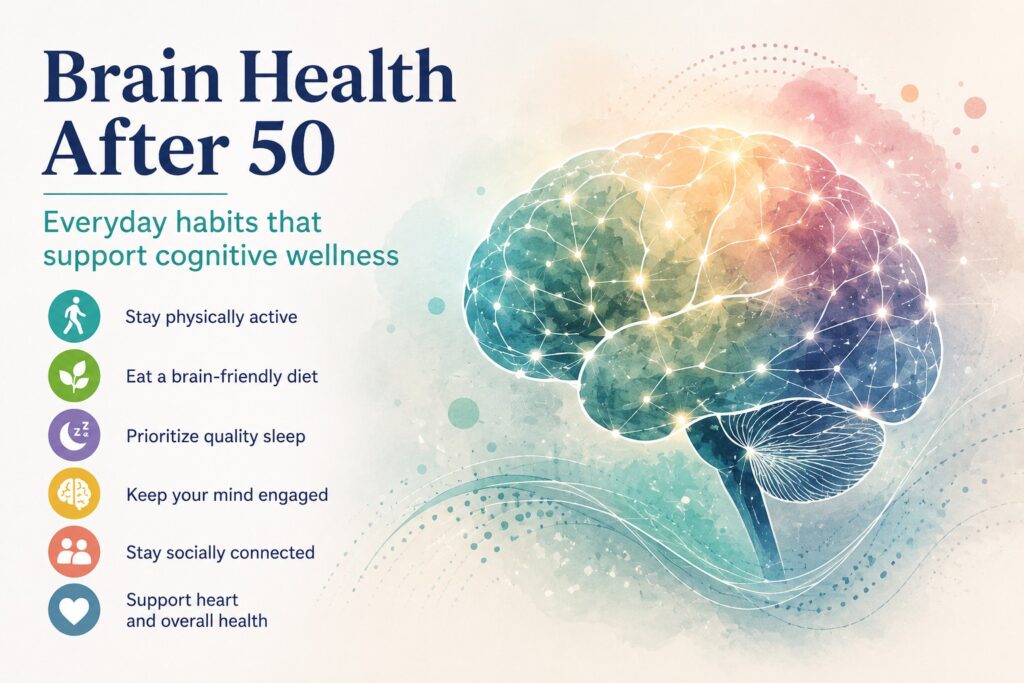
Research suggests that staying physically active, eating a balanced diet, getting enough quality sleep, keeping the mind engaged, maintaining meaningful social connections, and caring for overall cardiovascular health may all contribute to healthy cognitive aging.
Rather than focusing on perfection, aim for steady, sustainable habits that support your overall well-being. Small lifestyle changes practiced consistently over time can make a meaningful difference to your health—not only for your brain, but for your quality of life as a whole.
If you’re interested in learning more about healthy aging, explore our Healthy Aging for Women Over 50: A Complete Guide, where you’ll find practical information on maintaining strength, mobility, bone health, balance, and overall wellness as you age.
References
- National Institute on Aging (NIA). Cognitive Health and Older Adults.
https://www.nia.nih.gov/health/brain-health/cognitive-health-and-older-adults - National Institute on Aging (NIA). Brain Health.
https://www.nia.nih.gov/health/brain-health - National Institute on Aging (NIA). Memory Problems, Forgetfulness, and Aging.
https://www.nia.nih.gov/health/memory-loss-and-forgetfulness/memory-problems-forgetfulness-and-aging - World Health Organization (WHO). Risk Reduction of Cognitive Decline and Dementia: WHO Guidelines.
https://www.who.int/publications-detail-redirect/risk-reduction-of-cognitive-decline-and-dementia - National Institute on Aging (NIA). Healthy Lifestyle Linked With Better Cognitive Function in Older Adults.
https://www.alzheimers.gov/news/healthy-lifestyle-linked-better-cognitive-function-older-adults