Maintaining good balance becomes increasingly important as we get older. While occasional unsteadiness can happen to anyone, balance naturally changes with age due to gradual shifts in muscle strength, coordination, vision, and reaction time. These changes can increase the risk of falls, which are one of the leading causes of injury among older adults.
The good news is that balance is not fixed. Research suggests that regular movement, strength-building activities, and simple lifestyle habits may help improve stability and reduce the risk of falls. Small, consistent changes can make everyday activities feel safer and help support long-term independence.
In this guide, you’ll learn why balance changes after 50, what factors may increase fall risk, and practical strategies that may help you stay steady and confident as you age.
Why Balance Changes After 50
Balance depends on several body systems working together. Your muscles, joints, inner ears, eyes, and brain constantly communicate to help you remain upright while standing, walking, or changing direction.
As we age, these systems naturally become a little less efficient. Muscle mass gradually declines, joints may become less flexible, vision can change, and reaction times may slow. While these changes are a normal part of aging, they can make balance more challenging if healthy habits are not maintained.
Many women also become less physically active over time, which may further reduce strength, coordination, and confidence in movement. Fortunately, regular physical activity can help support many of the body systems involved in maintaining balance.
Understanding why balance changes is the first step toward preventing falls and maintaining mobility throughout healthy aging.
Common Factors That Increase Fall Risk
Although anyone can experience a fall, certain factors may make falls more likely after age 50. Many of these risks are manageable through awareness and healthy lifestyle choices.
Muscle Weakness
Strong muscles help stabilize the body during everyday movements. As muscle mass gradually decreases with age, it may become more difficult to recover from a stumble or maintain balance on uneven surfaces.
Strengthening the muscles of the legs, hips, and core may help improve stability and support safer movement.
Reduced Flexibility
Flexible joints allow the body to move smoothly and respond quickly to changes in position. Stiff muscles and reduced joint mobility may limit movement and affect balance during daily activities.
Gentle stretching and regular movement may help maintain flexibility over time.
Vision Changes
Vision provides important information about your surroundings. Age-related changes in eyesight can make it more difficult to judge distances, notice obstacles, or adapt to changes in lighting.
Regular eye examinations and appropriate corrective lenses can help support safe mobility.
Certain Medications
Some medications may cause side effects such as dizziness, drowsiness, or lower blood pressure, all of which can affect balance.
If you notice changes in your balance after starting a new medication, discuss your concerns with your healthcare provider rather than stopping medication on your own.
Home Hazards
Many falls occur at home due to everyday hazards that often go unnoticed.
Common examples include:
- Loose rugs
- Electrical cords across walkways
- Poor lighting
- Slippery bathroom floors
- Cluttered pathways
- Stairs without sturdy handrails
Identifying and addressing these hazards can significantly reduce the likelihood of falls.
Previous Falls
A previous fall may increase the risk of another one, partly because it can reduce confidence and lead people to become less active. Unfortunately, reduced activity may contribute to further muscle weakness and balance difficulties.
Breaking this cycle through safe movement and gradual confidence-building can play an important role in maintaining independence.
Simple Exercises That May Help Improve Balance
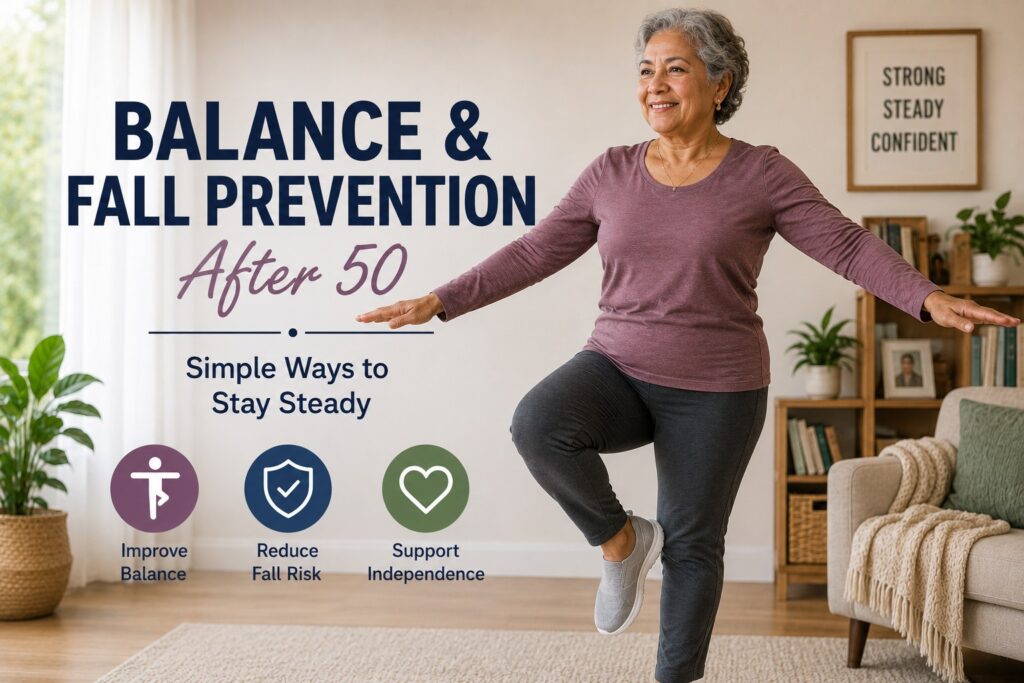
One of the best ways to support balance is to stay physically active. Balance is a skill that can be practiced, and even simple exercises performed consistently may help improve stability, coordination, and confidence in everyday movement.
Before starting any new exercise routine, choose activities that match your current fitness level and use a sturdy chair or countertop for support if needed.
Practice Standing on One Foot
Standing on one foot is a simple exercise that challenges your balance and strengthens the muscles that help keep you steady.
To practice:
- Stand beside a sturdy chair or countertop.
- Hold on lightly for support if needed.
- Lift one foot a few inches off the floor.
- Hold the position for 10 to 30 seconds.
- Repeat on the opposite side.
As your balance improves, you may gradually reduce the amount of support you use.
Walk Heel to Toe
This exercise helps improve coordination and body awareness.
Take a slow step forward, placing the heel of one foot directly in front of the toes of the other foot. Continue walking in a straight line for several steps while focusing on controlled movements.
If necessary, perform this exercise near a wall or countertop for added stability.
Strengthen Your Legs
Strong leg muscles play a key role in maintaining balance during everyday activities such as climbing stairs, standing from a chair, or walking on uneven ground.
Simple bodyweight exercises may include:
- Chair sit-to-stands
- Wall squats
- Step-ups on a low platform
- Gentle calf raises
For a more comprehensive approach, explore our guide on Strength Training for Women Over 50: Benefits Beyond Weight Loss, which explains how resistance exercise supports mobility, bone health, and healthy aging.
Keep Walking
Walking may not seem like a balance exercise, but regular walking helps maintain muscle strength, coordination, endurance, and confidence in movement.
Choosing safe walking routes, wearing supportive shoes, and walking consistently may all contribute to better long-term mobility.
Our article Walking After 50: Benefits for Mobility, Wellness, and Weight Management explores these benefits in greater detail.
Everyday Habits That May Help Prevent Falls
Fall prevention is not only about exercise. Many small lifestyle habits can also make daily life safer and reduce the likelihood of losing your balance.
Wear Supportive Footwear
Shoes with non-slip soles and good support provide a more stable foundation than high heels, loose-fitting shoes, or worn-out slippers.
Whenever possible, choose footwear that fits well and provides good traction on different surfaces.
Keep Your Home Safe
Simple home modifications can make a meaningful difference.
Consider:
- Removing loose rugs or securing them with non-slip backing.
- Improving lighting in hallways and stairways.
- Installing handrails on both sides of staircases when possible.
- Using grab bars in showers and near toilets.
- Keeping frequently used items within easy reach.
- Cleaning up cords and clutter from walking areas.
These changes can help create a safer home environment without major renovations.
Stay Active Every Day
Even if you don’t follow a structured exercise program, daily movement helps maintain strength, flexibility, and coordination.
Activities such as gardening, household chores, walking the dog, or taking regular walks all contribute to staying physically active.
Have Regular Vision and Hearing Checkups
Both vision and hearing contribute to balance. Keeping prescriptions up to date and addressing hearing changes may help you navigate your surroundings more safely.
Routine preventive care is an important part of maintaining independence as you age.
Review Medications Periodically
Some prescription and over-the-counter medications may affect alertness, coordination, or blood pressure.
If you notice dizziness or unsteadiness, discuss your medications with your healthcare provider or pharmacist. Never stop taking prescribed medication without professional guidance.
Stay Confident and Keep Moving
Many people become less active after experiencing a fall or even after developing a fear of falling. While this reaction is understandable, avoiding movement may gradually reduce strength and balance, making falls more likely over time.
Remaining safely active helps maintain both physical ability and confidence, creating a positive cycle that supports long-term independence.
When to Talk to Your Healthcare Provider
Occasional loss of balance can happen to anyone, especially when moving quickly, walking on uneven surfaces, or feeling tired. However, frequent balance problems or repeated falls should not be considered a normal part of aging.
Consider speaking with your healthcare provider if you:
- Have fallen more than once within the past year.
- Feel unsteady while walking on a regular basis.
- Experience dizziness, fainting, or frequent lightheadedness.
- Notice sudden changes in your balance or coordination.
- Avoid daily activities because you are afraid of falling.
- Have difficulty getting up after a fall.
Your healthcare provider can evaluate whether an underlying medical condition, medication, vision problem, or other health concern may be contributing to your symptoms.
Seeking advice early may help identify treatable factors and reduce the risk of future falls.
How Balance Supports Healthy Aging
Good balance is about much more than preventing falls. It plays an important role in maintaining the confidence and independence needed to enjoy everyday life.
When you feel steady on your feet, you’re more likely to:
- Stay physically active.
- Walk with confidence.
- Continue participating in hobbies and social activities.
- Maintain independence at home.
- Reduce your risk of injury.
- Support overall mobility as you age.
Balance also works together with other pillars of healthy aging. Strong bones help reduce the impact of falls, healthy muscles improve stability, and regular physical activity supports both coordination and mobility.
By focusing on these areas together, you create a strong foundation for staying active and independent throughout the years.
Conclusion
Balance naturally changes with age, but losing stability is not an inevitable part of getting older. Many of the factors that influence balance—including muscle strength, flexibility, physical activity, and home safety—can be improved through consistent daily habits.
Simple exercises, regular movement, supportive footwear, and a safer home environment may all help reduce the risk of falls while improving confidence in everyday activities.
Healthy aging is about maintaining the ability to do the things you enjoy for as long as possible. By making balance and fall prevention part of your wellness routine today, you can help support greater mobility, independence, and quality of life in the years ahead.
References
- National Institute on Aging. Falls and Fractures in Older Adults. https://www.nia.nih.gov/health/falls-and-falls-prevention
- Centers for Disease Control and Prevention (CDC). Older Adult Fall Prevention. https://www.cdc.gov/older-adult-fall-prevention/
- National Institute on Aging. Exercise and Physical Activity. https://www.nia.nih.gov/health/exercise-and-physical-activity
- World Health Organization (WHO). Falls. https://www.who.int/news-room/fact-sheets/detail/falls
- American Academy of Orthopaedic Surgeons (AAOS). Fall Prevention. https://orthoinfo.aaos.org/