
Menopause is a natural stage of life that every woman experiences if she lives long enough. Yet despite being a universal transition, it is often surrounded by confusion, misinformation, and uncertainty.
Many women enter menopause without fully understanding what is happening inside their bodies. Changes in menstrual cycles, hormone levels, energy, sleep, mood, and overall well-being can seem unexpected, especially when symptoms begin gradually during the years leading up to menopause.
The reality is that menopause is not a disease, illness, or medical condition that needs to be cured. It is a normal biological transition that marks the end of a woman’s reproductive years.
Understanding menopause can help women feel more prepared, make informed health decisions, and approach this stage of life with greater confidence.
What Is Menopause?
Menopause is officially defined as the point when a woman has gone 12 consecutive months without a menstrual period, provided there is no other medical explanation for the absence of menstruation.
At this stage, the ovaries have significantly reduced their production of estrogen and progesterone, the primary hormones involved in reproduction.
Although menopause is often discussed as a single event, it is actually one milestone within a broader transition that unfolds over several years.
In the United States, the average age of menopause is approximately 51 years old, although some women experience it earlier or later.
Menopause Is a Transition, Not a Single Day
One of the most common misconceptions is that menopause happens suddenly.
In reality, menopause is the midpoint of a larger transition that includes three stages:
| Stage | Description |
|---|---|
| Perimenopause | The years leading up to menopause when hormone levels begin to fluctuate |
| Menopause | The milestone reached after 12 consecutive months without a period |
| Postmenopause | The years following menopause |
Each stage brings its own changes and experiences.
Some women move through this transition with relatively mild symptoms, while others experience more noticeable physical and emotional changes.
Why Does Menopause Happen?
Women are born with a limited number of eggs stored in their ovaries.
As women age, the ovaries gradually become less responsive and produce lower amounts of reproductive hormones.
Eventually, ovulation becomes less frequent and menstrual cycles become increasingly irregular until periods stop altogether.
This process is a normal part of aging.
The hormonal changes associated with menopause affect much more than reproduction. Estrogen influences many systems throughout the body, including:
- The brain
- Bones
- Heart and blood vessels
- Muscles
- Skin
- Urinary tract
- Reproductive tissues
This helps explain why menopause can affect women in different ways.
When Does Menopause Usually Occur?
Most women reach menopause between the ages of 45 and 55.
The average age is around 51.
However, there is considerable variation.
Several factors may influence timing, including:
- Genetics
- Smoking history
- Certain medical treatments
- Surgical removal of the ovaries
- Some autoimmune conditions
A woman whose mother experienced menopause earlier may also be more likely to experience menopause earlier.
What Changes During Menopause?
The most significant change is the decline in estrogen and progesterone production.
Because these hormones influence multiple body systems, women may notice changes involving:
- Menstrual cycles
- Body temperature regulation
- Sleep quality
- Mood
- Cognitive function
- Sexual health
- Body composition
- Bone health
- Cardiovascular health
Not every woman experiences all of these changes.
The severity and duration of symptoms can vary widely from one individual to another.
Common Signs That Menopause May Be Approaching
Many women first notice changes during perimenopause, the transition that occurs before menopause.
Possible signs include:
- Irregular periods
- Changes in menstrual flow
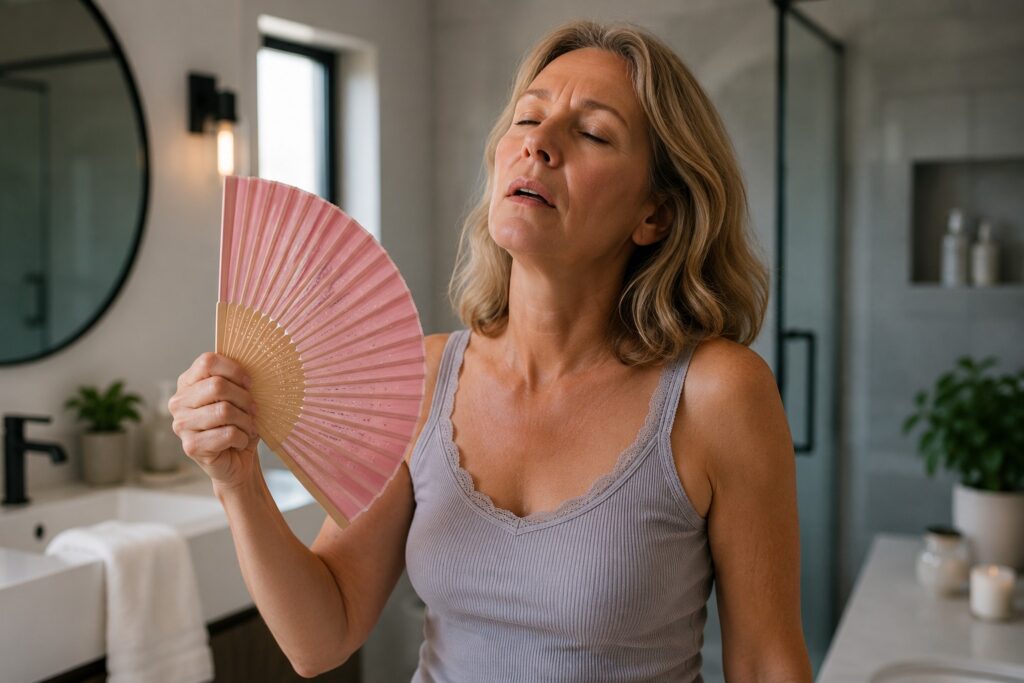
- Hot flashes
- Night sweats
- Mood changes
- Difficulty sleeping
- Vaginal dryness
- Reduced libido
- Changes in concentration
- Changes in energy levels
These symptoms can appear years before menopause officially occurs.
Women interested in learning more about specific symptoms can explore our dedicated guide to menopause symptoms.
Menopause and Long-Term Health
Menopause is often discussed in terms of symptoms, but its impact extends beyond the transition itself.
As estrogen levels decline, certain aspects of long-term health deserve additional attention.
Bone Health
Estrogen plays an important role in maintaining bone density.
After menopause, bone loss tends to occur more rapidly, increasing the risk of osteoporosis and fractures later in life.
Maintaining bone health becomes increasingly important during postmenopause.
Heart Health
Before menopause, women generally experience lower rates of cardiovascular disease than men of similar age.
After menopause, that difference begins to narrow.
This does not mean heart disease becomes inevitable, but it highlights the importance of maintaining healthy lifestyle habits.
Body Composition
Many women notice changes in body composition during midlife.
These changes may include:
- Reduced muscle mass
- Increased abdominal fat
- Changes in metabolism
These shifts are influenced by a combination of aging, hormonal changes, physical activity levels, and dietary habits.
Can You Still Live Well After Menopause?
Absolutely.
One of the biggest misconceptions about menopause is that it represents a decline in health or quality of life.
For many women, menopause marks the beginning of a new stage focused on long-term wellness, personal priorities, and healthy aging.
While symptoms can be challenging for some women, menopause itself does not prevent women from remaining active, healthy, productive, and engaged.
Many women find that once the transition stabilizes, they feel more confident and better equipped to focus on their long-term health goals.
Healthy Habits That Support Women During Menopause
Although menopause cannot be prevented, several lifestyle habits may support overall well-being throughout the transition.
Stay Physically Active
Regular physical activity can support:
- Bone health
- Heart health
- Muscle strength
- Mobility
- Overall quality of life
Prioritize Sleep
Consistent sleep habits may support physical recovery, cognitive function, and emotional well-being.
Eat a Nutrient-Rich Diet
A balanced eating pattern rich in:
- Fruits
- Vegetables
- Lean protein
- Whole grains
- Healthy fats
can support healthy aging.
Manage Stress
Practices such as mindfulness, walking, meditation, social connection, and relaxation techniques may support overall well-being.
When Should You Talk With a Healthcare Professional?
It may be helpful to seek medical guidance if:
- Symptoms interfere with daily life
- Menstrual changes seem unusual
- Menopause appears to be occurring unusually early
- You have concerns about bone health, heart health, or other aspects of wellness
A healthcare professional can help determine whether symptoms are related to menopause or another health condition.
The Bottom Line
Menopause is a natural transition that marks the end of a woman’s reproductive years. Although hormonal changes can affect many areas of health, menopause is not a disease and should not be viewed as one.
Understanding what menopause is, why it happens, and what changes may occur can help women approach this stage with greater confidence and make informed decisions about their health.
For many women, menopause is not an ending. It is the beginning of a new chapter focused on long-term wellness, healthy aging, and quality of life.
References
- National Institute on Aging (NIA) – What Is Menopause?
- Office on Women’s Health (U.S. Department of Health & Human Services) – Menopause
- American College of Obstetricians and Gynecologists (ACOG) – The Menopause Years
- Mayo Clinic – Menopause: Symptoms and Causes
- Cleveland Clinic – Menopause Overview