One of the first questions many women ask when approaching menopause is:
“What symptoms should I expect?”
The answer is not always straightforward.
Some women experience only mild changes, while others notice symptoms that significantly affect daily life. Symptoms may begin during perimenopause, continue through menopause, and gradually change over time.
The good news is that menopause symptoms are a normal part of the body’s transition away from its reproductive years. Understanding why they happen and which symptoms are most common can make this stage feel less confusing and easier to navigate.
Why Do Menopause Symptoms Happen?
Most menopause symptoms are linked to changing hormone levels, particularly estrogen and progesterone.
These hormones influence far more than reproduction. They also affect:
- Body temperature regulation
- Sleep
- Mood
- Energy levels
- Cognitive function
- Sexual health
- Bone health
- Metabolism
As hormone levels fluctuate and eventually decline, women may experience a variety of physical and emotional changes.
Not every woman experiences the same symptoms, and symptom severity can vary considerably.
Changes in Menstrual Cycles
For many women, menstrual changes are the first noticeable sign of the menopause transition.
Periods may become:
- More irregular
- Heavier than usual
- Lighter than usual
- Closer together
- Further apart
Some women skip periods occasionally before menstruation eventually stops altogether.
These changes often begin during perimenopause and may continue for several years.
Hot Flashes and Night Sweats
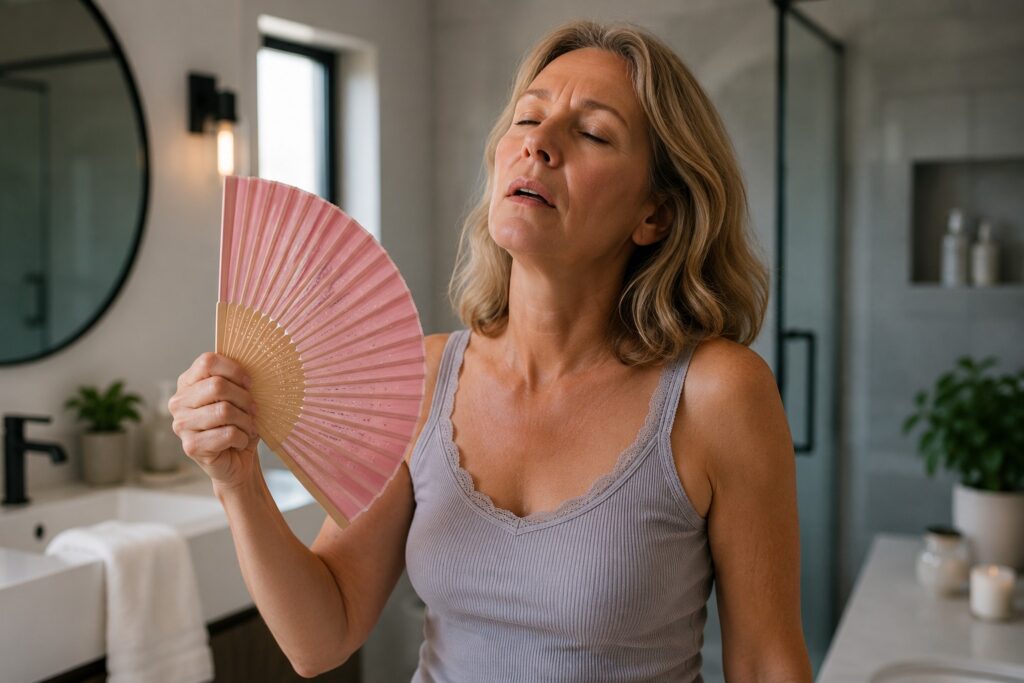
Hot flashes are among the most recognized menopause symptoms.
Women often describe a sudden sensation of warmth that spreads through the face, neck, and upper body.
A hot flash may be accompanied by:
- Sweating
- Flushing
- Rapid heartbeat
- Chills afterward
When these episodes occur during sleep, they are commonly known as night sweats.
For some women, hot flashes are occasional. For others, they can occur multiple times throughout the day and night.
Sleep Changes
Sleep problems become more common during the menopause transition.
Women may experience:
- Difficulty falling asleep
- Frequent awakenings during the night
- Early morning waking
- Poor sleep quality
Night sweats can contribute to sleep disruption, but hormonal changes themselves may also influence sleep patterns.
Over time, poor sleep can affect mood, concentration, and energy levels.
Fatigue and Low Energy
Many women report feeling more tired than usual during menopause.
This fatigue may result from a combination of factors, including:
- Hormonal changes
- Sleep disruption
- Stress
- Lifestyle factors
Some women describe a general lack of energy, while others feel physically or mentally exhausted despite adequate rest.
Brain Fog and Difficulty Concentrating
Many women notice changes in memory, concentration, or mental clarity during menopause.
This experience is commonly referred to as brain fog.
Women may find themselves:
- Forgetting names or appointments
- Losing their train of thought
- Having difficulty concentrating
- Feeling mentally slower than usual
Although these changes can be frustrating, they are a common part of the menopause transition for many women.
Mood Changes
Hormonal fluctuations may also affect emotional well-being.
Some women experience:
- Irritability
- Increased anxiety
- Mood swings
- Reduced stress tolerance
- Feelings of emotional sensitivity
Sleep disruption, life stressors, and other midlife changes can also contribute to mood changes during this stage.
Not every woman experiences significant emotional symptoms, but they are common enough to be recognized as part of the menopause transition.
Vaginal Dryness and Sexual Health Changes
As estrogen levels decline, changes may occur in vaginal and urinary tissues.
Some women experience:
- Vaginal dryness
- Irritation
- Discomfort during intimacy
- Changes in sexual desire
These symptoms are common but often under-discussed.
Women should know that they are a normal part of menopause and can be discussed openly with a healthcare professional.
Weight and Body Composition Changes
Many women notice changes in body composition during midlife.
These changes may include:
- Increased abdominal fat
- Reduced muscle mass
- Changes in body shape
- Slower metabolism
While menopause may contribute to these changes, aging, activity levels, sleep habits, and dietary patterns also play important roles.
Weight changes during menopause are common, but they are not inevitable.
Joint and Muscle Discomfort
Some women report increased joint stiffness, aches, or muscle discomfort during menopause.
Common areas include:
- Knees
- Hips
- Shoulders
- Hands
Researchers continue to study the relationship between estrogen and joint health, but many women notice these changes during the menopause transition.
Which Symptoms Are Most Common?
Although every experience is unique, some symptoms are reported more frequently than others.
| Common Symptom | Frequently Reported During Menopause |
|---|---|
| Hot flashes | Yes |
| Night sweats | Yes |
| Sleep changes | Yes |
| Fatigue | Yes |
| Brain fog | Yes |
| Mood changes | Yes |
| Vaginal dryness | Yes |
| Weight changes | Yes |
| Joint discomfort | Sometimes |
Women may experience several symptoms simultaneously, while others notice only one or two.
How Long Do Menopause Symptoms Last?
There is no universal timeline.
Some women experience symptoms for only a few years.
Others notice symptoms for a longer period.
In many cases:
- Symptoms begin during perimenopause
- Peak around menopause
- Gradually improve over time
The duration and severity of symptoms vary considerably from person to person.
When Should You Speak With a Healthcare Professional?
It may be helpful to seek professional guidance if:
- Symptoms interfere with daily life
- Sleep problems become persistent
- Mood changes become difficult to manage
- Bleeding patterns seem unusual
- Symptoms occur unexpectedly early
A healthcare professional can help determine whether symptoms are related to menopause or another health condition.
The Bottom Line
Menopause symptoms can affect many areas of physical and emotional well-being.
Common symptoms include hot flashes, night sweats, sleep changes, fatigue, brain fog, mood fluctuations, vaginal dryness, and changes in body composition.
Not every woman experiences the same symptoms, and there is no single “normal” menopause experience.
Understanding these changes can help women approach menopause with greater confidence and seek support when needed.
References
- National Institute on Aging (NIA)
- Office on Women’s Health
- American College of Obstetricians and Gynecologists (ACOG)
- Mayo Clinic
- Cleveland Clinic
- The Menopause Society