
Most women expect menopause to happen sometime between their mid-40s and mid-50s. So when periods become irregular, symptoms begin to appear, or menopause seems to be arriving earlier than expected, it’s natural to have questions.
Is this normal?
Is something wrong?
Should I be concerned?
While menopause is a normal part of aging, some women experience it earlier than average. Understanding why this happens and what it may mean for your health can help you navigate the transition with greater confidence.
What Is Early Menopause?
Early menopause occurs when menopause happens between the ages of 40 and 45.
Menopause is officially reached when a woman has gone 12 consecutive months without a menstrual period and there is no other medical explanation for the absence of menstruation.
To put this into perspective:
| Stage | Typical Age |
|---|---|
| Natural Menopause | 45–55 |
| Early Menopause | 40–45 |
| Primary Ovarian Insufficiency (POI) | Before 40 |
Although menopause before age 45 is less common than menopause at the average age, it is not rare.
How Common Is Early Menopause?
Most women reach menopause around age 51.
However, some women naturally experience menopause earlier.
Research suggests that approximately 5% of women experience menopause before age 45.
Because symptoms often begin years before menopause officially occurs, many women first notice changes during perimenopause and may not immediately realize that they are entering the transition earlier than expected.
Why Does Early Menopause Happen?
There is not always a single explanation.
For some women, menopause occurs earlier simply because of natural biological variation. For others, certain health or lifestyle factors may play a role.
Genetics
Genetics is one of the strongest influences on menopause timing.
Women whose mothers or sisters experienced menopause earlier often find that they follow a similar pattern.
While family history cannot predict exactly when menopause will occur, it can provide useful clues.
Natural Variation
Not every woman follows the average timeline.
Just as some women start puberty earlier or later than others, menopause timing also varies.
For many women, early menopause is simply part of their natural biological pattern rather than a sign of illness or disease.
Smoking
Studies have consistently found a link between smoking and earlier menopause.
Researchers believe chemicals in tobacco may affect ovarian function and accelerate the decline of reproductive hormones over time.
Certain Medical Conditions
Some autoimmune disorders and other health conditions may affect ovarian function.
Examples may include certain thyroid disorders and autoimmune diseases.
However, these conditions account for only a portion of early menopause cases.
Medical Treatments and Surgery
Some medical treatments can affect ovarian function.
Examples include:
- Certain cancer treatments
- Radiation affecting the pelvic area
- Surgical removal of the ovaries
These situations are less common but can lead to menopause occurring earlier than expected.
Sometimes There Is No Clear Cause
One of the most important things for women to understand is that a clear cause is not always identified.
Many women who experience early menopause have no obvious medical condition, family history, or identifiable trigger.
Signs and Symptoms of Early Menopause
The symptoms of early menopause are generally the same as those experienced during menopause at a more typical age.
Common signs may include:
- Irregular periods
- Missed periods
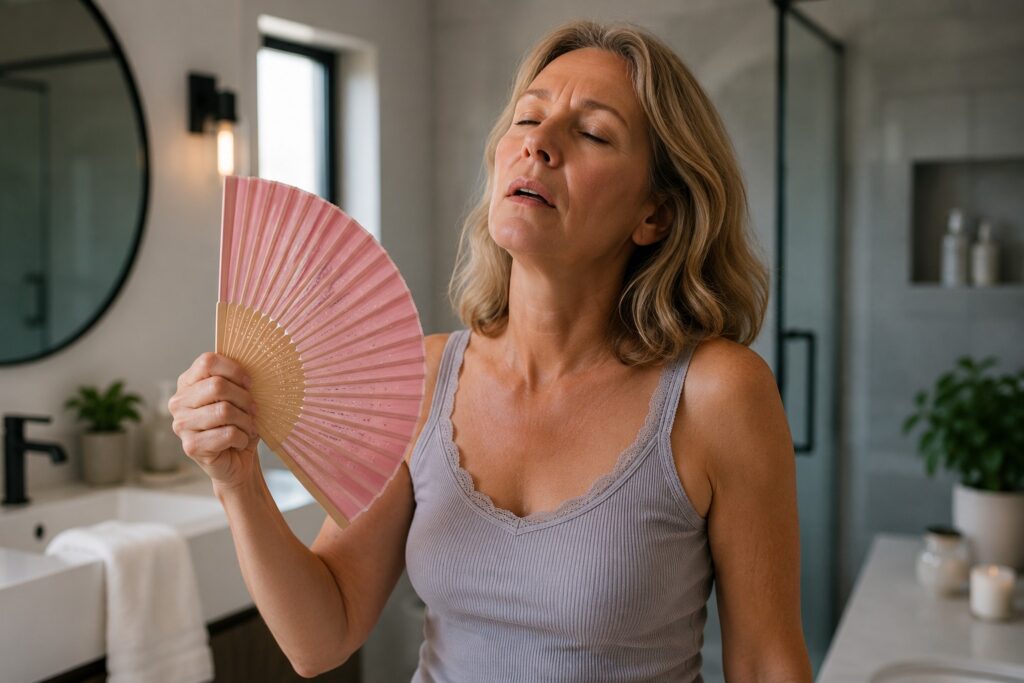
- Hot flashes
- Night sweats
- Sleep disturbances
- Mood changes
- Vaginal dryness
- Reduced libido
- Difficulty concentrating
- Changes in energy levels
The symptoms themselves are not necessarily different.
The main difference is when they occur.
Women interested in learning more about specific symptoms can explore our complete guide to menopause symptoms.
How Is Early Menopause Diagnosed?
Healthcare professionals typically consider several factors.
Menstrual History
Changes in menstrual patterns often provide important clues.
Symptoms
The timing and type of symptoms may help determine whether menopause is approaching.
Medical History
Family history, health conditions, medications, and previous treatments may also be considered.
Blood Tests
In some cases, hormone testing may be used to support the evaluation.
No single test can predict menopause with complete certainty, but laboratory results may help provide additional information.
Why Does Early Menopause Matter?
Early menopause is not a disease.
However, because hormone levels decline sooner than expected, there are a few health considerations worth discussing.
Bone Health
Estrogen helps maintain bone density.
Women who experience menopause earlier spend more years with lower estrogen levels, which may increase the risk of osteoporosis later in life.
Heart Health
Researchers believe estrogen may play a role in cardiovascular health before menopause.
As a result, women who experience menopause earlier may want to pay particular attention to heart-healthy lifestyle habits.
Fertility
Many women discover early menopause while they are still considering future family plans.
Because fertility declines as ovarian function decreases, earlier menopause can affect reproductive options.
Emotional Well-Being
Unexpected changes can create uncertainty.
Some women feel relieved to better understand what is happening, while others experience frustration, sadness, or anxiety about entering menopause earlier than expected.
These reactions are normal and understandable.
When Should You Speak With a Healthcare Professional?
It may be helpful to seek medical advice if:
- You experience menopause-like symptoms before age 45
- Your periods stop unexpectedly
- Menstrual changes seem unusual
- Symptoms interfere with daily life
- You have concerns about fertility or future health
A healthcare professional can help determine whether symptoms are related to menopause and discuss any appropriate next steps.
The Bottom Line
Early menopause occurs when menopause happens between the ages of 40 and 45.
Although genetics appears to play an important role, factors such as smoking, certain medical conditions, and some medical treatments may also contribute.
For many women, however, early menopause is simply part of their natural biological timeline.
Understanding what early menopause is, why it happens, and how it may affect future health can make this transition feel less uncertain and help women make informed decisions about their well-being.
References
- National Institute on Aging (NIA)
- Office on Women’s Health
- American College of Obstetricians and Gynecologists (ACOG)
- Mayo Clinic
- Cleveland Clinic
- NHS