Many women are surprised to learn that menopause does not begin when periods stop.
In fact, the transition often starts years earlier.
This stage is called perimenopause, and it is during this time that many women first notice changes in their menstrual cycles, sleep patterns, mood, energy levels, and overall well-being.
Because symptoms can develop gradually and vary widely from person to person, perimenopause is often confusing. Some women wonder whether they are experiencing normal aging, increased stress, or the beginning of menopause itself.
Understanding what perimenopause is and what typically happens during this transition can help make these changes feel less uncertain.
What Is Perimenopause?
Perimenopause is the transitional stage leading up to menopause.
During this time, the ovaries gradually begin producing lower and less predictable amounts of estrogen and progesterone.
These hormonal fluctuations can affect the menstrual cycle and contribute to a variety of physical and emotional changes.
Although menopause is officially reached after 12 consecutive months without a menstrual period, perimenopause occurs before that milestone and can last for several years.
Perimenopause is a normal biological process, not a disease or medical condition.
When Does Perimenopause Start?
Most women begin perimenopause during their 40s.
However, some women notice changes in their late 30s, while others may not experience significant symptoms until their mid-to-late 40s.
There is no exact age when perimenopause begins.
Several factors may influence timing, including:
- Genetics
- Smoking history
- Medical treatments
- Overall reproductive health
Because every woman is different, comparing experiences with friends or family members is not always helpful.
What Happens During Perimenopause?
The defining feature of perimenopause is hormonal fluctuation.
Unlike menopause, where hormone levels remain consistently lower, perimenopause is characterized by unpredictability.
Hormone levels may rise and fall from month to month, which helps explain why symptoms often come and go.
This hormonal instability affects the menstrual cycle first, but it can also influence other areas of health and well-being.
Changes in Menstrual Cycles
For many women, menstrual changes are the earliest sign of perimenopause.
Periods may become:
- More irregular
- Heavier than usual
- Lighter than usual
- Closer together
- Further apart
Some women skip periods occasionally before cycles become increasingly infrequent.
Although these changes are common, unusual bleeding patterns should always be discussed with a healthcare professional.
Common Symptoms of Perimenopause
Symptoms vary considerably.
Some women experience only mild changes, while others notice more significant disruptions.
Common experiences include:
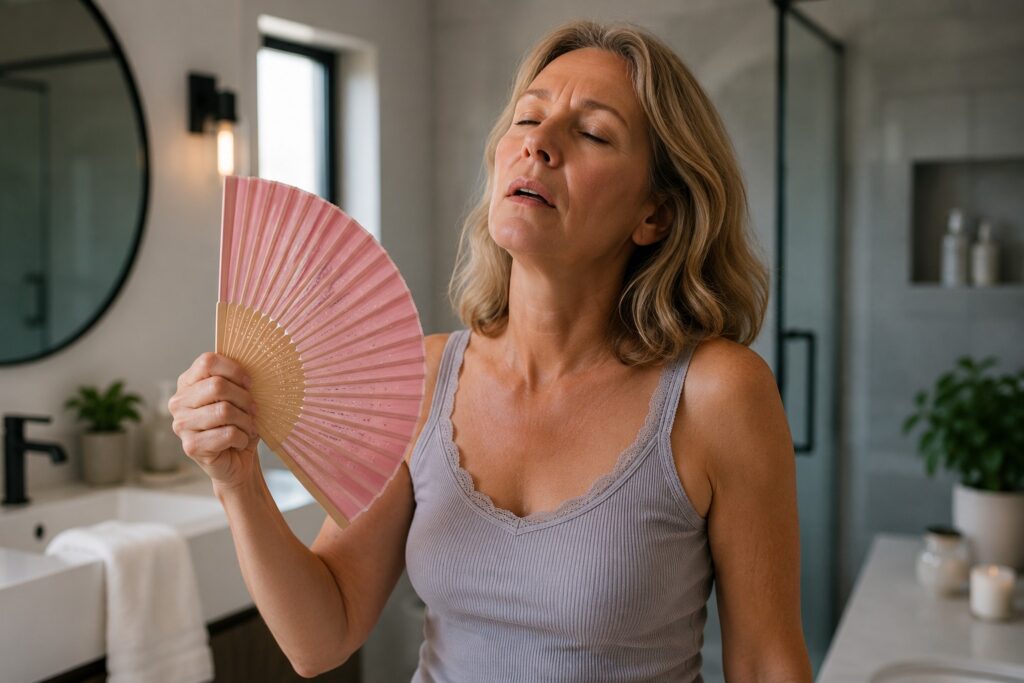
- Hot flashes
- Night sweats
- Sleep changes
- Mood fluctuations
- Increased irritability
- Brain fog
- Fatigue
- Vaginal dryness
- Reduced libido
- Changes in weight distribution
Not every woman experiences every symptom.
The frequency and intensity of symptoms can change throughout the transition.
How Long Does Perimenopause Last?
The duration of perimenopause varies widely.
For many women, the transition lasts between four and eight years.
Some women experience a shorter transition, while others move through perimenopause more gradually.
Because hormonal fluctuations are unpredictable, symptoms may improve, worsen, or change over time.
There is no universal timeline.
Can You Get Pregnant During Perimenopause?
Yes.
Although fertility declines during perimenopause, pregnancy remains possible until menopause has officially occurred.
Ovulation becomes less predictable, but it does not stop immediately.
Women who do not wish to become pregnant should continue using appropriate contraception until advised otherwise by a healthcare professional.
How Do You Know If You’re in Perimenopause?
There is no single test that can definitively determine whether a woman is in perimenopause.
Healthcare professionals typically consider:
- Age
- Menstrual changes
- Symptoms
- Medical history
Hormone testing is sometimes used in specific situations, but fluctuating hormone levels can make interpretation difficult.
For many women, the combination of age, cycle changes, and symptoms provides the clearest picture.
Healthy Habits During Perimenopause
Although perimenopause cannot be prevented, healthy habits may help support overall well-being during the transition.
Stay Active
Regular physical activity may support:
- Heart health
- Bone strength
- Mood
- Mobility
Prioritize Sleep
Consistent sleep habits may help support energy levels and overall wellness.
Eat a Balanced Diet
A nutrient-rich eating pattern can support healthy aging and overall health.
Manage Stress
Stress management practices such as walking, mindfulness, journaling, and social connection may help support emotional well-being.
When Should You Speak With a Healthcare Professional?
Consider speaking with a healthcare professional if you experience:
- Very heavy bleeding
- Bleeding between periods
- Symptoms that significantly affect daily life
- Menopause-like symptoms unusually early in life
- Concerns about menstrual changes
Professional evaluation can help rule out other possible causes and provide guidance when needed.
The Bottom Line
Perimenopause is the natural transition leading up to menopause.
During this stage, hormone levels fluctuate, menstrual cycles become less predictable, and a variety of physical and emotional changes may occur.
Although the experience differs from woman to woman, understanding what perimenopause is and what to expect can make this transition feel less confusing and more manageable.
References
- National Institute on Aging (NIA) – What Is Menopause?
- Office on Women’s Health – Menopause Basics
- American College of Obstetricians and Gynecologists (ACOG) – The Menopause Years
- Mayo Clinic – Perimenopause: Symptoms and Causes
- Cleveland Clinic – Perimenopause