Many women notice changes in their weight during midlife and wonder whether menopause is to blame. You may be eating much the same way you always have, staying reasonably active, and yet finding that maintaining your weight feels more difficult than it used to.
Research shows there is some truth behind these experiences—but the explanation is more complex than many people realize.
While menopause is associated with changes in body composition and fat distribution, it is not the only reason women gain weight during midlife. Aging, declining muscle mass, physical activity, sleep quality, genetics, and lifestyle habits all influence how the body changes over time.
Understanding what current research says can help you separate common myths from evidence-based facts and focus on habits that support healthy aging.
Does Menopause Actually Cause Weight Gain?
One of the biggest misconceptions about menopause is that hormonal changes alone cause women to gain a significant amount of weight.
Current evidence suggests that menopause itself is not the primary driver of weight gain.
Instead, researchers believe that several factors occur simultaneously during midlife:
- natural aging
- declining estrogen levels
- gradual muscle loss
- lower daily energy expenditure
- changes in physical activity
- sleep disturbances
- lifestyle changes
Together, these factors make weight management more challenging than it was in earlier decades.
Rather than asking whether menopause causes weight gain, a more accurate question is:
How does menopause change the way the body stores and uses energy?
What Research Shows
Several long-term studies have examined how women’s bodies change before, during, and after menopause.
One of the clearest findings is that body weight tends to increase gradually with age, regardless of menopause.
However, menopause appears to influence where fat is stored more than how much weight is gained.
As estrogen levels decline, women are more likely to accumulate fat around the abdomen rather than around the hips and thighs.
This shift in fat distribution is one of the most consistent findings in menopause research and explains why many women notice changes in their waistline even when the number on the scale changes only slightly.
Researchers also emphasize that these changes vary considerably from one woman to another. Genetics, physical activity, nutrition, sleep, and overall health all contribute to individual differences.
Why Fat Distribution Changes During Menopause
Estrogen plays a role in many systems that influence body composition.
Before menopause, women tend to store a greater proportion of body fat around the hips and thighs.
As estrogen production declines, the body gradually shifts toward storing more fat around the abdomen.
This type of fat distribution is sometimes called central adiposity.
There are two main reasons why this change receives attention from researchers.
First, abdominal fat often changes how clothing fits, even when body weight remains relatively stable.
Second, fat stored deeper within the abdomen—known as visceral fat—is metabolically active and has been associated with a higher risk of certain long-term health conditions.
It’s important to remember that this shift is a normal biological process. While it becomes more common during menopause, the extent of the change differs from person to person.
Weight Gain vs. Body Composition
Many women focus on the number they see on the scale.
Researchers, however, increasingly focus on body composition, which provides a more complete picture of how the body changes with age.
Body composition describes how much of your body is made up of:
- fat mass
- muscle mass
- bone
- water
- other lean tissues
Two women may weigh exactly the same but have very different body compositions.
During midlife, many women gradually lose muscle while gaining body fat. This combination can change body shape, reduce strength, and make everyday activities feel more challenging over time.
For this reason, healthcare professionals often encourage looking beyond body weight alone when evaluating overall health.
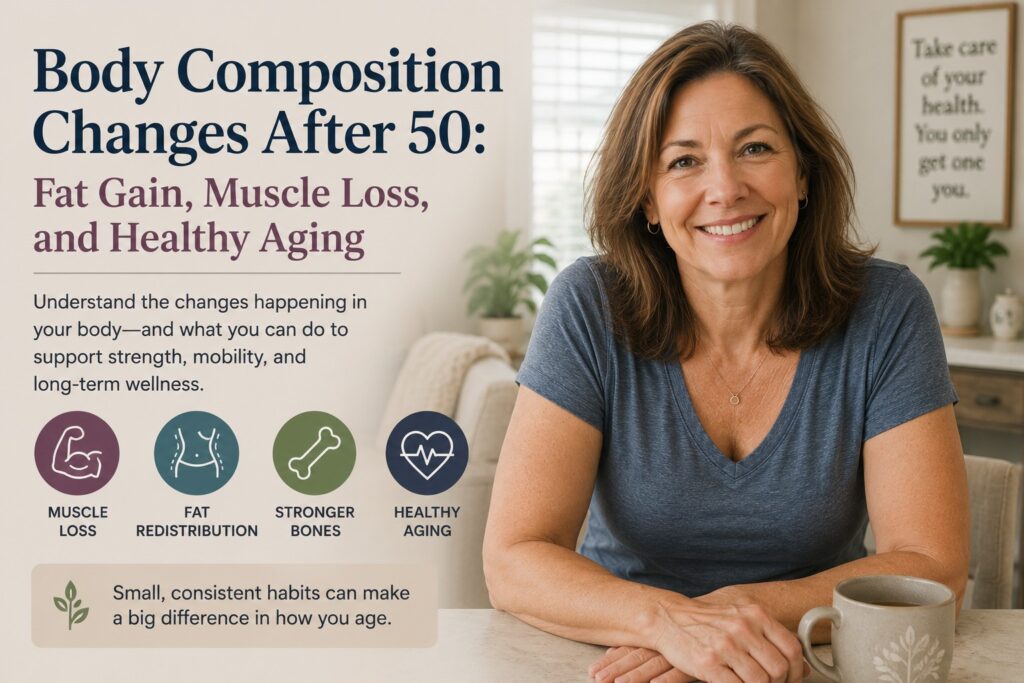
Our upcoming article on Body Composition Changes After 50 explores these changes in greater depth.
Why Muscle Loss Matters
One of the most important age-related changes affecting weight management is the gradual loss of lean muscle.
Muscle tissue requires more energy than fat tissue, even while the body is at rest.
As muscle mass naturally declines with age, daily calorie expenditure may decrease slightly.
Although menopause contributes to changes in body composition, researchers believe that muscle loss associated with aging is also an important reason why maintaining weight may become more difficult during midlife.
This is one reason why preserving muscle has become an important focus of healthy aging recommendations.
Does Menopause Slow Your Metabolism?
Many women assume that menopause dramatically slows their metabolism, making weight gain almost inevitable.
Current research paints a more balanced picture.
Scientists now believe that metabolism changes gradually with age rather than suddenly when menopause begins. While hormonal changes may influence how the body stores fat, much of the reduction in daily energy expenditure appears to be related to the gradual loss of muscle mass and changes in physical activity over time.
In other words, menopause is only one piece of the puzzle.
This distinction is important because it means there are still meaningful ways to support healthy aging through everyday habits. We’ll explore this topic in greater detail in our article Does Metabolism Really Slow Down After 40?
Other Factors That Can Influence Weight During Midlife
Hormonal changes are only one part of the story. Several other factors often develop during the same stage of life and may contribute to changes in body weight or body composition.
Sleep Changes
Many women experience sleep disturbances during the menopause transition.
Night sweats, hot flashes, or difficulty staying asleep can reduce both sleep quality and sleep duration.
Research suggests that poor sleep may affect:
- hunger and fullness hormones
- appetite regulation
- food cravings
- energy levels
- motivation to be physically active
Over time, these changes may make healthy weight management more challenging.
Lower Physical Activity
Daily movement often changes during midlife.
Busy careers, caregiving responsibilities, joint discomfort, or simply becoming less active over the years can reduce overall calorie expenditure.
Even small reductions in everyday movement—such as walking less, standing less often, or spending more time sitting—can have a meaningful impact when accumulated over months and years.
Stress
Midlife is often accompanied by significant life changes, including career demands, caring for aging parents, supporting adult children, or preparing for retirement.
Long-term stress may influence eating behaviors, sleep quality, and motivation for exercise.
While stress alone does not directly cause menopause-related weight gain, it can contribute to habits that make maintaining a healthy weight more difficult.
Menopause Weight Gain: Myths vs. Facts
Many beliefs about menopause and weight have been repeated for years, but research does not always support them.
| Myth | What Current Research Suggests |
|---|---|
| Menopause automatically causes significant weight gain. | Weight gain is usually gradual and influenced by aging, lifestyle, and hormonal changes together. |
| Hormones are the only reason women gain weight after 40. | Hormones contribute, but muscle loss, sleep, physical activity, and nutrition also play important roles. |
| Belly fat is unavoidable. | Fat distribution often changes, but healthy lifestyle habits may help support a healthier body composition. |
| Nothing can be done after menopause. | Regular movement, strength training, balanced nutrition, and good sleep continue to support healthy aging. |
Understanding these differences helps set realistic expectations.
Rather than searching for a single cause or a quick solution, it’s more helpful to view menopause as one factor within a much broader picture of healthy aging.
Healthy Habits That May Support Weight Management
Although menopause brings natural biological changes, research consistently shows that healthy daily habits remain important throughout midlife.
Many experts recommend focusing on sustainable routines rather than restrictive diets or rapid weight-loss programs.
Habits that may support overall health include:
- staying physically active most days of the week
- including strength training to help preserve muscle
- eating a balanced eating pattern rich in vegetables, fruits, whole grains, and lean protein
- getting adequate sleep whenever possible
- managing long-term stress through healthy coping strategies
- maintaining realistic expectations about gradual body changes
These habits may not prevent every age-related change, but they can support overall health, physical function, and long-term well-being.
If you’re looking for broader guidance, our article Weight Management for Women Over 40: Building Healthy Habits That Last explores practical strategies for maintaining a healthy lifestyle during midlife.
When Should You Talk to a Healthcare Professional?
Gradual changes in body weight are common during midlife, but not every change should automatically be attributed to menopause.
Consider speaking with a healthcare professional if you experience:
- rapid or unexplained weight gain over a short period
- persistent fatigue that doesn’t improve with rest
- significant changes in appetite
- swelling, shortness of breath, or other unusual symptoms
- concerns about thyroid disease, diabetes, or another medical condition
A healthcare professional can help determine whether another health condition may be contributing to weight changes and discuss appropriate evaluation if needed.
The Bottom Line
Menopause can influence body weight, but it is rarely the only explanation for weight changes during midlife.
Current research suggests that menopause has a greater impact on body composition and fat distribution than on body weight itself. As estrogen levels decline, women are more likely to store fat around the abdomen, while normal aging, gradual muscle loss, physical activity, sleep quality, nutrition, and lifestyle habits also play important roles.
Rather than focusing on the number on the scale alone, it can be more helpful to understand how the body naturally changes over time. Healthy habits—including regular movement, strength training, balanced nutrition, quality sleep, and stress management—continue to support overall wellness throughout midlife and beyond.
Although menopause presents new challenges, it does not mean that healthy aging is out of reach. Understanding what research shows allows women to replace myths with realistic expectations and make informed decisions that support their long-term health.
References
- National Institute on Aging. What Is Menopause?
- MedlinePlus. Menopause.
- Mayo Clinic. The Reality of Menopause Weight Gain.
- Davis SR, Castelo-Branco C, Chedraui P, et al. Understanding Weight Gain at Menopause. Climacteric.
- Greendale GA, Sternfeld B, Huang MH, et al. Changes in Body Composition and Weight During the Menopause Transition.
- Lovejoy JC, Champagne CM, de Jonge L, et al. Increased Visceral Fat and Decreased Energy Expenditure During the Menopausal Transition.
- Study of Women’s Health Across the Nation (SWAN). Findings on menopause, aging, and body composition.